General Discussion
Related: Editorials & Other Articles, Issue Forums, Alliance Forums, Region Forums

 = new reply since forum marked as read
Highlight:
NoneDon't highlight anything
5 newestHighlight 5 most recent replies
= new reply since forum marked as read
Highlight:
NoneDon't highlight anything
5 newestHighlight 5 most recent replies

democrank
(12,513 posts)Thanks for posting these
Tanuki
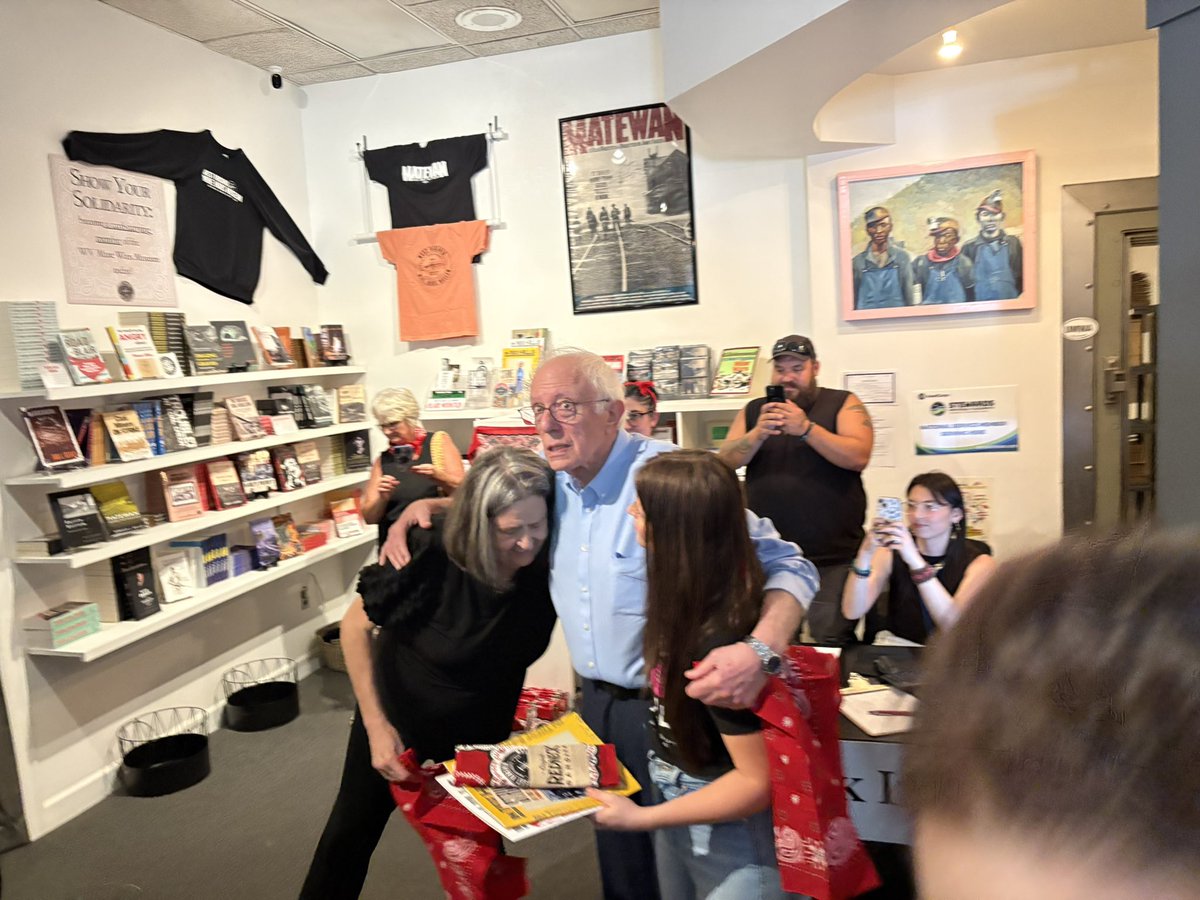
(16,412 posts)Note the Matewan and WV Mine Wars Museum posters in the bottom photo of the OP. Matewan is also in Mingo County, just a few miles from Lenore. (I grew up in southwestern WV).
https://en.m.wikipedia.org/wiki/Battle_of_Matewan
"The Battle of Matewan (also known as the Matewan Massacre[1]) was a shootout in the town of Matewan in Mingo County and the Pocahontas Coalfield mining district, in southern West Virginia. It occurred on May 19, 1920 between local coal miners and their allies and the Baldwin–Felts Detective Agency. The dead included the detective agency's founder's two brothers and Matewan's mayor Cabell Testerman, who supported the union.
Employed by the Stone Mountain Coal Company, a contingent of the Baldwin–Felts Detective Agency arrived on the No. 29 morning train to evict families that had been living at the Stone Mountain Coal Camp on the outskirts of town. The detectives carried out several evictions before they ate dinner at the Urias Hotel and, upon finishing, they walked toward the train depot to catch the five o'clock train back to Bluefield, West Virginia. As the detectives made their way to the train depot, they were intercepted by Matewan Chief of Police Sid Hatfield, who claimed to have arrest warrants from the Mingo County sheriff. Hatfield, a native of the Tug River Valley, was a supporter of the miners' attempts to organize the UMWA in the southern coalfields of West Virginia. Detective Albert Felts and his brother Lee Felts then produced their own warrant for Sid Hatfield's arrest. Upon inspection, Matewan mayor Cabell Testerman claimed it was fraudulent.[2]
Unbeknownst to the detectives, they had been surrounded by armed miners, who watched intently from the windows, doorways, and roofs of the businesses that lined Mate Street. Accounts vary as to who actually fired the first shot and the ensuing gun battle left seven detectives and three townspeople dead, including the Felts brothers and Testerman. The battle was hailed by miners and their supporters for the number of casualties inflicted on the Baldwin–Felts detectives. This incident, along with events such as the Ludlow Massacre in Colorado six years earlier, marked an important turning point in the battle for miners' rights.
Coal miners
At the time, the United Mine Workers of America had just elected John L. Lewis as their president. During this period, miners worked long hours in unsafe and dismal working conditions, while being paid low wages. Adding to the hardship was the use of coal scrip by the Stone Mountain Coal Company, because the scrip could only be used for those goods the company sold through their company stores. A few months before the battle at Matewan, union miners in other parts of the country went on strike, receiving a full 27 percent pay increase for their efforts. Lewis recognized that the area was ripe for change, and planned to organize the coal fields of southern Appalachia. The union sent its top organizers, including the famous Mary Harris "Mother" Jones.[3] Roughly 3000 men signed the union's roster in the spring of 1920. They signed their union cards at the community church, something that they knew could cost them their jobs, and in many cases their homes. The coal companies controlled many aspects of the miners' lives.[4] Stone Mountain Coal Corporation fought back with mass firings, harassment, and evictions.[5]"...(more)

Nanjeanne
(6,556 posts)
democratsruletheday
(1,856 posts)damn he's special. His energy is off the Richter scale.
Nanjeanne
(6,556 posts)