General Discussion
Related: Editorials & Other Articles, Issue Forums, Alliance Forums, Region Forums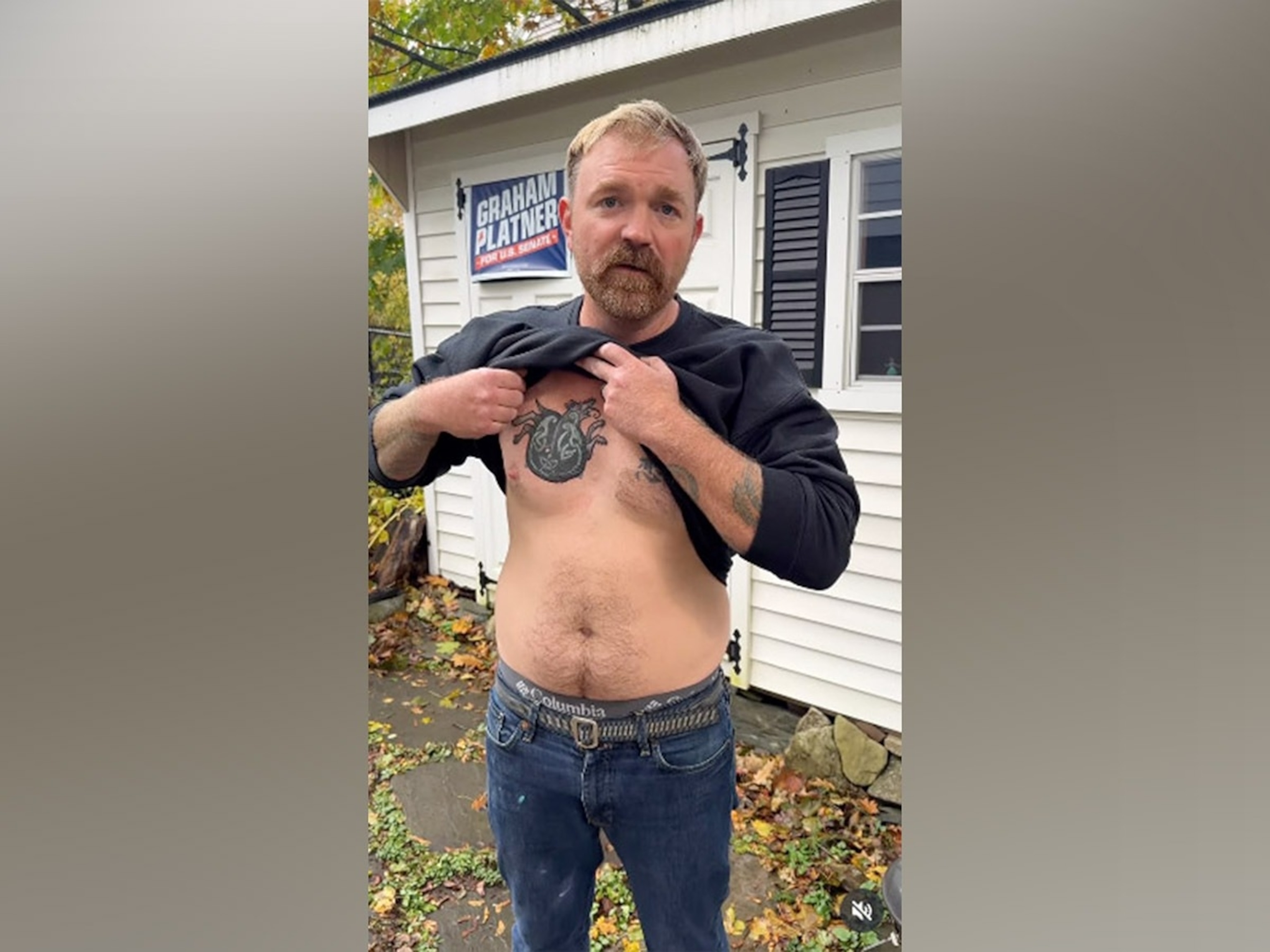
 = new reply since forum marked as read
Highlight:
NoneDon't highlight anything
5 newestHighlight 5 most recent replies
= new reply since forum marked as read
Highlight:
NoneDon't highlight anything
5 newestHighlight 5 most recent replies

Fiendish Thingy
(24,693 posts)
QueerDuck
(2,450 posts)... took down his candidacy. However, as we know, Platner actually survived those early scandals and managed to win the Democratic primary.
"...It was a hand grenade" His campaign ultimately imploded overnight when severe criminal allegations surfaced. A series of bombshell reports accused him of physical abuse, stealthing, and sexual assault, forcing Platner to abruptly withdraw and suspend his campaign.
That's my take. In the end, it wasn't just one thing, and it wasn't just the initial things... it was an explosion of shrapnel.

EdmondDantes_
(2,373 posts)He won 70% of the primary in spite of all of years of poor decisions without doing anything to demonstrate change. Even allegations of being physically abusive and blocking a former partner in a room didn't do anything because it was dismissed as partisan without any evidence other than the woman was a Republican.
It was only the rape allegation that was the problem. Yes some of us held all the other things should have been disqualifying, but we were a distinct minority and it wasn't like another set of horrible Reddit posts or cheating on his wife was going to make people see all the red flags.
QueerDuck
(2,450 posts)Yes, it's true he won 72% of the vote on June 9, but we have to look at that number with a heavy dose of reality. That primary happened after Governor Janet Mills suspended her campaign. Platner was running effectively uncontested.
The vast majority of Maine Democrats (and crucially, the independent swing voters needed to flip this seat) simply stayed home. Staying home during an uncontested primary is a sign of an unenthusiastic electorate, not an endorsement of his laundry list of red flags.
Consider the actual math:
--- Primary turnout is a tiny fraction of the electorate. Winning 72% of an uncontested primary means Platner was only backed by roughly 10% to 15% of the total voters needed to win in November.
--- Because of Maine's Ranked-Choice Voting law, a candidate cannot win with a simple plurality. They must cross a strict 50% threshold to win.
--- If we argue that voters staying home equals "approval" of a candidate, then it would also be "logical" to conclude that most of Maine vastly approves of Susan Collins based on her past victories. Well, we know that isn’t true.
All I'm trying to say is that defending his past bad behavior by pointing to a skewed primary metric ignores the cold, hard math required to win.
A primary base can nominate a candidate, but it takes a true majority of the entire state's general electorate to win the seat. To beat Collins, our replacement nominee must capture a broad coalition of moderate Democrats and independents who are highly sensitive to these red flags.
When a replacement is nominated, we need to make sure the candidate is properly vetted, and the process needs to do more than cater to a motivated 15% slice of the base.
EdmondDantes_
(2,373 posts)Why did she drop out? Because she was polling behind and wasn't able to raise money.
Platner is a deeply flawed person who never should have gotten that far, but the economic progressive movement is strong right now. Mamdani, AOC, the other elections in New York, Sanders' two presidential runs.
QueerDuck
(2,450 posts)Why she dropped out, or how much money he raised early on doesn't change the underlying structural problem.
Early primary polling and fundraising success within a highly motivated segment of the party base are entirely different animals from surviving a statewide general election. A powerful economic movement can absolutely propel a candidate to an uncontested primary victory... but it cannot shield them from fatal personal liabilities or magically force general election swing voters to look the other way.
The issue was never the strength of that subset of the progressive movement. Instead, it was the total failure to vet the individual carrying the banner before the primary locked him in.
However, it appears that you want to pivot and now debate the "history of the primary" rather than the hard reality of the general election math required to win, we are just going in circles. I've stated my case as clearly as I can, and I see no point in continuing to repeat myself. So I'll leave the last word to you and step away from this sub-thread.
Have a great weekend. 
How do we "make sure the candidate is properly vetted?" Aren't primaries mostly decided by "a motivated 15% slice of the base?" Why even have primaries if the results are meaningless? Didn't Governor Janet Mills suspend her campaign because Platner was so far ahead in polling? Where were the "moderate Democrats and independents who are highly sensitive to these red flags" back then when it mattered? Or are they unmotivated, and if so, why would that be?
QueerDuck
(2,450 posts)Proper vetting means campaigns, local media, and state party apparatuses doing basic due diligence on a candidate's background prior to the primary cycle, rather than leaving voters completely in the dark until a catastrophic general election collapse.
As for where the general election voters were during a low-turnout primary ... they were at home. And this is exactly why primary metrics are a poor gauge for general election viability. Independents and moderates don't typically participate in party primaries, but they absolutely decide the winner in November. That isn't a lack of motivation; it is just how the electoral calendar works.
However, this series of rapid-fire rhetorical questions feels more like an interrogation than a discussion. I’ve laid out the electoral realities as simply as possible, so I'll leave it there and step away. Have a great weekend.
Response to QueerDuck (Reply #2)
Post removed

TommyT139
(2,575 posts)... that's a crappy cover tattoo.
First off, if that's a Celtic or Viking style dog, it looks like he got squashed by an anvil, like in a cartoon.
And if you zoom in, you can still see the corners of the crossbones, on both sides.
Floyd R. Turbo
(33,765 posts)
TommyT139
(2,575 posts)😂
Floyd R. Turbo
(33,765 posts)
LudwigPastorius
(15,334 posts)I think it's supposed to be Rape E. Coyote.
QueerDuck
(2,450 posts)I took one for the team and zoomed in, and you are 100% correct. That "viking dog" looks less like ancient folklore and more like Wile E. Coyote after a bad day with ACME. I can practically hear the classic “SPLAT” sound effect looking at it.
Leaving the corners of the crossbones visible is the perfect punchline to a terrible cover-up job. It is very clear to me that he put the exact same amount of foresight, care, and intelligence into choosing this cover-up design as he did when he chose the Totenkopf the first time around.
You’d think someone trying to hide a massive political liability would find a tattoo artist who understands basic coverage. The decision to leave the literal bones peeking out on both sides is very "revealing" (so to speak!)
It turns out his personal aesthetic decisions are just as rushed, messy, and poorly vetted as his political campaign.

greatauntoftriplets
(179,704 posts)Floyd R. Turbo
(33,765 posts)
betsuni
(29,528 posts)