Environment & Energy
Related: About this forumElectric Power Reliability, Energy Burdens, and Climate Change Beliefs in the United States
The paper I will very briefly discuss in this post is this one: Electric Power Reliability, Energy Burdens, and Climate Change Beliefs in the United States Hang Shuai, Chien-Fei Chen, Benjamin Sovacool, Suzanna Sumkhuu, and Zhenglai Shen Environmental Science & Technology 2025 59 (50), 27206-27221.
Before commenting further, I hold a low opinion of one of the authors of this otherwise useful and interesting paper, the antinuke Benjamin Sovacool, who I hold as a member of an unfortunate cabal of academics as well as prominent nonacademic "scientists" (i.e. Joe Romm and Ed Lyman) who help drive extreme global heating by raising specious objections to nuclear energy, which I regard as the only sustainable and acceptable tool to address the collapse of the planetary atmosphere.
As for the word "belief," physical realities are not a function of human belief. The role of evolution, now understood not only on a taxonomy and fossil basis is well established on a mechanistic molecular level, and is a true explanation of the origin of species whether one believes the Biblical account of the world being created in 7 days (before the concept of a "day" existed) or not.
The reality that extreme global heating is driven by human actions is also a fact is whether some Trumper in Indiana "believes" that or not.
The laws of relativity were not affected at all by the rejection of it as "Jewish Physics" by Nazi Nobel Laureate Johannes Stark.
The fact that fossil fuels kill people in vastly greater numbers daily than nuclear power ever has during its entire 70 years history, and that trillions of dollars thrown at so called "renewable energy" has had no effect on extreme global heating does not depend on whether Benjamin Sovacool believes nuclear energy is "too dangerous" or "too expensive." These things are facts not subject to belief.
Nevertheless, my barely hidden contempt for Sovacool notwithstanding, I fully credit this paper for pointing out what we at DU know of the Republican party: They only care about an issue, or even acknowledge an issue when it effects them personally.
Sovacool is a social scientist, not a physical scientist, and thus his survey tools are probably have some validity.
From the text of the paper, which explains, in a realistic and mechanistic way (despite my immediate bias it was going to be a nonsense paper) the connection between belief and reality:
A growing literature shows that direct exposure to climate hazards shapes social beliefs, policy preferences, and support for low-carbon technologies. (9,46,47) Personal experience with extreme weather and natural disasters tends to heighten concern about climate action or increase support for progressive energy and climate policies. (48−51) This pattern is evident even among minority groups and Indigenous communities. However, the literature has focused more broadly on hazard exposure than specifically on infrastructure disruptions.
Studies centered explicitly on power outages are comparatively limited. For example, (28) researchers examined California’s 2019 public safety power shut-offs and found effects on behavioral intentions, climate attitudes, utility perceptions (i.e., attitudes toward utilities), and government trust (i.e., politician approval ratings). Yet, most existing studies rely on aggregate national survey data (41) or single-state cases, overlooking spatially explicit factors such as local outage experience that may shape belief formation. At the national scale, the U.S. Department of Energy (DOE)’s The Environment for Analysis of Geo-Located Energy Information (EAGLE-I) data set provides county-level outage data from 2014 to 2023 and is widely used in engineering analyses of grid reliability. (52,53) To date, applications have largely focused on physical infrastructure resilience with far less attention to the social or perceptual dimensions of disruption...
"Expected," the word I highlighted is probably too loose a word, but perhaps my bias is making me too picayune about Benny's work here. From my perspective this is observed, not "expected." The ongoing collapse of the planetary atmosphere expressed as extreme weather is not something that's going to happen in the future. It is observed now.
The authors also define the "Energy Burden," the cost of energy, as a mechanistic issue, specifically referring to air conditioning, which is now necessary at times for human survival.
The problem of high EBs is exacerbated by extreme weather. Households have to operate their air conditioners for longer periods of time during heat waves and face greater heating needs during cold spells. Additionally, severe storms have the potential to disrupt the power supply, resulting in price increases or outages...
Despite the dishonest rhetoric which Sovacool and many others hand out that wind and solar are "cheap" - ignoring the very real and profound but hidden economic and environmental costs of fossil fuel redundancy, unreliability, mass and land requirements and short infrastructure lifetimes - the reality is that so called "renewable energy" leads to high electricity prices. The highest residential electricity prices in the United States outside of Hawaii , are in wind and solar "heaven," California, where the average statewide residential price reported by the EIA is 31.97 cents per kWh compared to a national average (including Hawaii) of 16.48 cents per kWh. (cf. Table 5 "T5a" : EIA Electric Sales, Revenue, and Average Price, accessed 12/31/2025)
(One is invited to compare electricity prices in France compared to Germany.)
I would suggest that Benny look at results, not cherry picked theory.
Anyway, the paper under discussion is not a bad one; indeed it's a good one as social science papers go.
Some figures from the text:
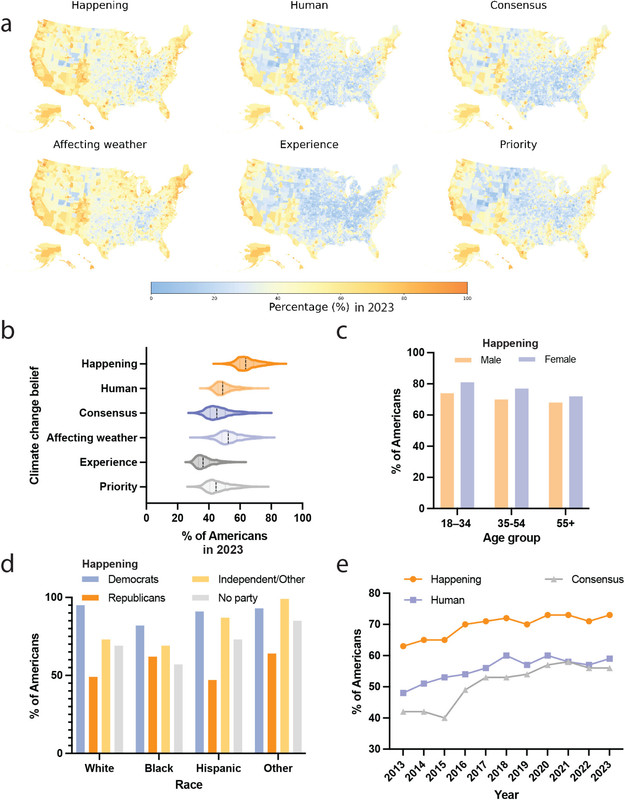
The caption:
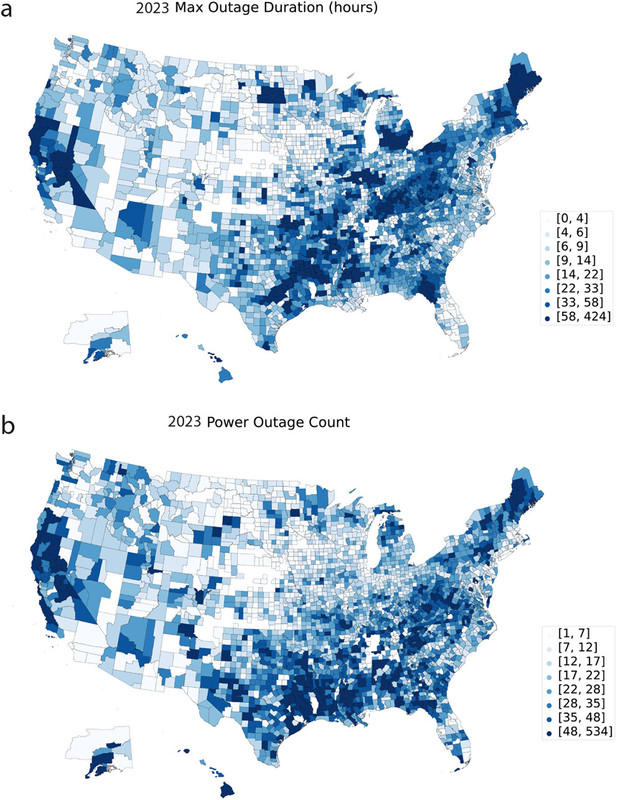
The caption:
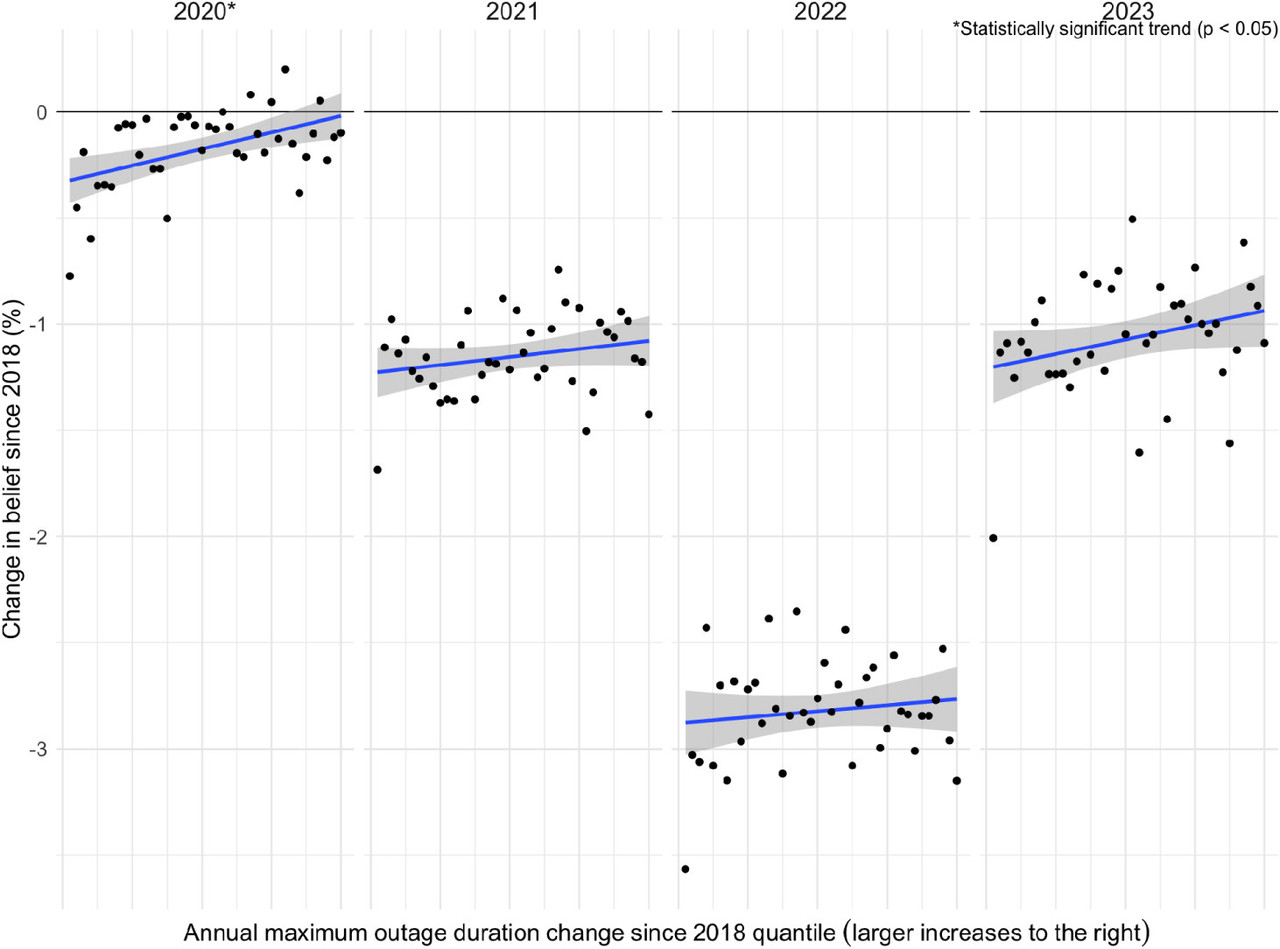
The caption:
The opening sentence of the conclusion to the paper:
A comment on the part of this sentence I have bolded: It is widely believed, but demonstrably untrue, that so called "renewable energy" represents a solution to address climate change. The purpose of "renewable energy" hype was never about addressing the use of fossil fuels. On the contrary it was, is and always will be about attacking nuclear energy, nuclear energy, as I often point out by the use of data, being the only realistic approach to addressing climate change. Thus the trillions squandered in the last decade on solar and wind energy are not making things get better, arguably (I would say "definitively" ) they are making things get worse, faster, as any look at the numbers for the concentration of the dangerous fossil fuel waste carbon dioxide in the atmosphere clearly show. The "Energy Burden" - the high costs associated with the useless reactionary belief that so called "renewable energy" has something to do with climate change - leads to counter productive "beliefs," although belief has nothing to do with, and often conflicts with, reality.
The disturbing, and perhaps psychologically inevitable, thing is that the acceptance of reality - in this case that extreme global heating has anthropogenic causes - is a function of personal experience, which may or may not be correctly interpreted on an individual basis. A different, but perhaps related examples were those we saw during Covid where people refused vaccines and went to their deaths pleading, even screaming, to be treated with the cattle de-wormer Ivermectin.
The planet is in a world of shit.
I wish you the happiest of New Years.
 = new reply since forum marked as read
Highlight:
NoneDon't highlight anything
5 newestHighlight 5 most recent replies
= new reply since forum marked as read
Highlight:
NoneDon't highlight anything
5 newestHighlight 5 most recent replies

thought crime
(1,839 posts)Can you explain why you believe renewable energy is not a solution, or part of a solution, to address climate change?
Can you explain why you believe efforts to use solar and wind energy are making things worse?

NNadir
(38,921 posts)...I don't believe that the massive mining for this scam is acceptable, and the massive cost on a scale of trillions of dollars - has done nothing at all to slow the rate of collapse of the planetary atmosphere.
In many hundreds of posts here I have pointed out that the changes in concentration of the dangerous fossil fuel waste carbon dioxide in the planetary atmosphere is rising faster than ever.
Here is an example from my DU series monitoring these concentrations, series that appear each spring:
New Weekly CO2 Concentration Record Set at the Mauna Loa Observatory, 430.86 ppm
Here is a graphic from the DU search for part the last two years of such posts:
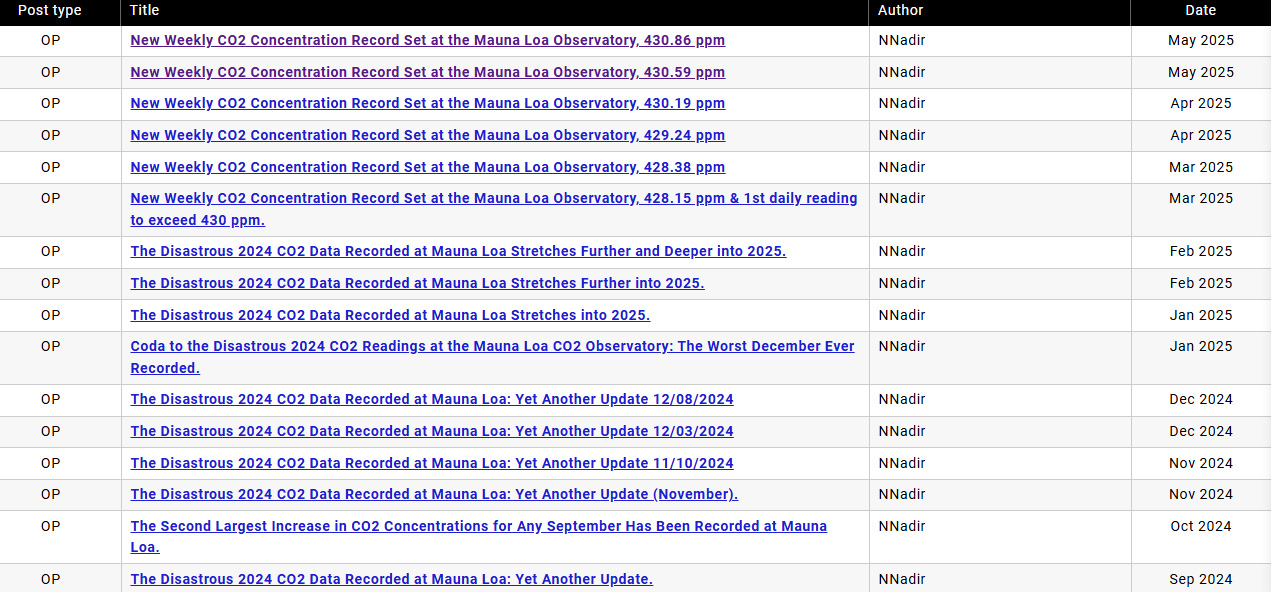
Arguably, I'm paying attention.
From another in this series, I have reported on the costs and expenditures of so called "renewable energy," this one:
New Weekly CO2 Concentration Record Set at the Mauna Loa Observatory, 430.19 ppm
The text:
We still have people here at DU, this late into the disaster prattling on about how so called "renewable energy" is beating out nuclear energy, even though the combined solar and wind industry combined has never, in an atmosphere of sybaritic bourgeois saturnalian enthusiasm, not once, produced as energy as nuclear energy produces routinely in an atmosphere of malign (and ignorant) criticism.
It is interesting and notable that the same people who still carry on with stupid reference to "costs" - they couldn't give a fuck about the cost of the extreme global heating we are now experiencing - and attack nuclear energy on this basis are completely and totally disinterested in attacking the unimaginable external costs of dangerous fossil fuels, costs recorded in millions of deaths each year, the destruction of vast ecosystems by fire and alternately inundation or just plain heat.
Irrespective of their inane anti-science rhetoric about batteries and hydrogen, as it disregards the laws of thermodynamics, an apologetic orgy of wishful thinking designed to make the failed solar and wind industries appear to be reliable, which they will never be, all the money spent on solar and wind is clearly wasted and ineffective. The impulse is reactionary, to make our energy supplies depend on the weather, precisely at the time we have destabilized the weather because the reactionary fantasy is not working.
How much money is it?
The amount of money spent on so called "renewable energy" since 2015 is 4.9 trillion dollars, compared to 524 billion dollars spent on nuclear energy (including a vague term the IEA calls "other clean energy" ), much of the latter to prevent the willful and deadly destruction of existing nuclear infrastructure. Presumably "other clean energy" includes fusion, which has provided zero useable energy for any purpose
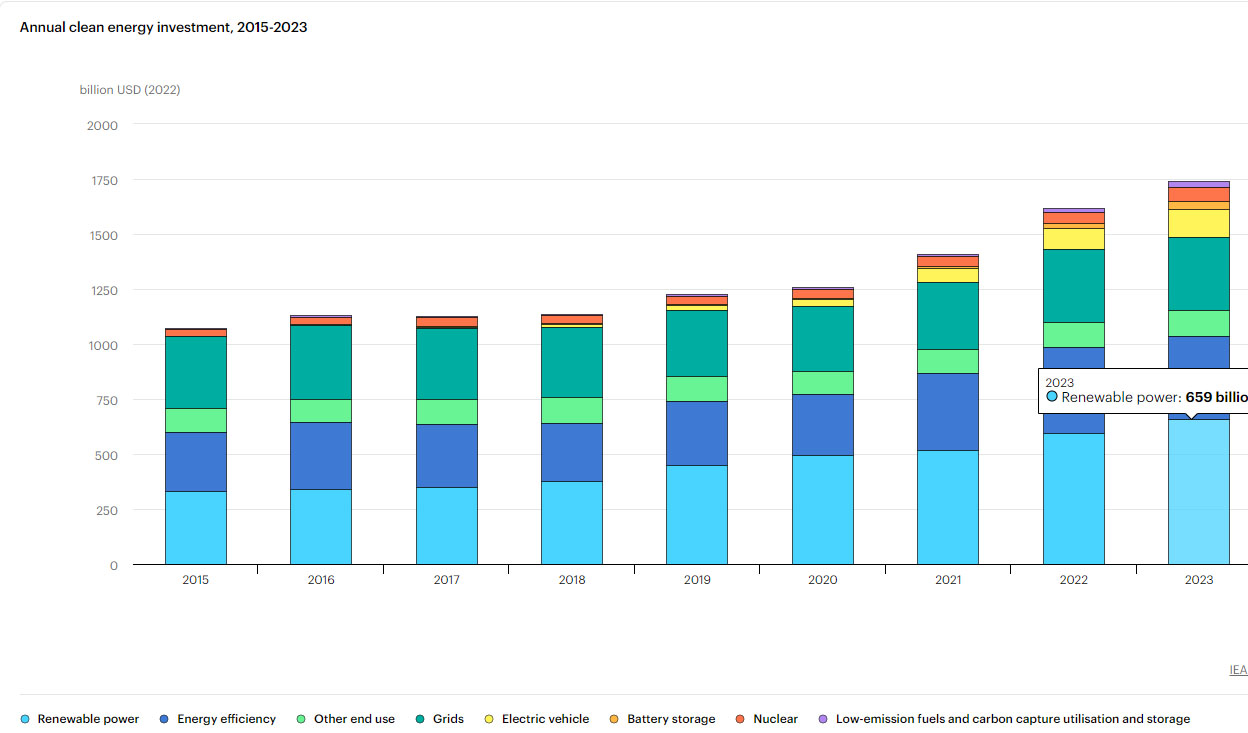
IEA overview, Energy Investments.
The graphic is interactive at the link; one can calculate overall expenditures on what the IEA dubiously calls "clean energy," ignoring the fact that the expenditure on so called "renewable energy" is basically a front for maintaining the growing use of fossil fuels. One may also download a *.csv file with the data.
For comparison 4.9 trillion dollars - it's certainly more than that now has been squandered on solar and wind junk - is greater than the GDP of India, a nation with more than a billion human beings living in it.
For what?
The purpose, the sole purpose, of so called "renewable energy" has never been about addressing fossil fuels - except as an afterthought - but solely about attacking nuclear energy.
I've been at DU for 23 years. When I arrived here, I was actually an apologist for so called "renewable energy" but I also supported nuclear energy. When pushed about the latter - for some reason on our end of the political spectrum we've bought into the dangerous selective attention of antinukes - I realized that enthusiasm for "renewable energy" had nothing to do with environmental reality, so I shifted some of my scientific attention from my professional life in pharmaceutical chemistry and my private interest in nuclear technology, to the claims about so called "renewable energy." What I discovered is that the term "renewable energy" is fraudulent. It isn't renewable, since it is reliant on ripping the shit out of the Earth's surface for mining purposes, and it is wholly and totally dependent on fossil fuels.
There is a moral cost as well:
"Lithium" batteries, supposed to address the unreliability of so called "renewable energy" depend heavily on cobalt slavery, and in any case, there is not enough cobalt in the world to make "renewable energy" reliable, as I reported here, when dealing with one of the "I'm not an antinuke" antinukes who march around here muttering:
The Number of Tesla Powerwalls Required That Would Address the Current German Dunkleflaute Event.
Here are the specifications of Tesla Powerwalls®: Specifications of Powerwalls®.
It is claimed they have a useable capacity of 13.5 kWh after being charged with 14 kWh of electricity, presumably at 25°C, with a putative thermodynamic efficiency - should you choose to believe it - of 96%. The maximum continuous power output is said to be 5 kW. The power requirements to match the combined coal and gas average continuous power of combined German coal and gas over the last 30 days, 44.4 GW would require 8,880,000 million Powerwalls®, to cover each day of Dunkelflaute; for 30 days, given that the wind wasn't blowing that much over that period, 266,400,000 Powerwalls®.
The specifications say that each Powerwall® weighs 114 kg, meaning that 30,369,600,000 kg of Powerwalls® would be required just for Germany.
According to Forbes, 15% of the weight of a Tesla Powerwall is cobalt, mined by Elon's happy Congolese slaves, meaning that the happy Congolese cobalt slaves would be required to mine and isolate 4,555,400 metric tons of cobalt to make Powerwalls® to cover this instance of Dunkleflaute with batteries.
This is 31.63 times as large as the world production of cobalt in 2021 according to the US Geological Survey
I'm sorry!!! I forgot to use "percent talk!" The demand for cobalt to cover month long Dunkleflaute in Germany observed in Nov-Dec 2022 would be 3163% the demand for all the world cobalt supply in 2021.
I note, in the moral/ethical sphere German antinukes funded the war in Ukraine by buying coal, oil and gas from Putin with their purported "renewable energy" nirvana. They didn't phase out coal, gas, or oil. They embraced all three. They phased out nuclear energy. The carbon intensity of their electricity is generally ten times or more than that of France.
It's an outrage.
Here's the basic way I see it:
If you scratch the surface of any apologist for this reactionary scam, so called "renewable energy," you will find every damned one of them attacking nuclear energy on picayune criteria they do not apply to anything else, including fossil fuels, about which they just don't give a rat's ass.
So called "renewable energy" is lipstick on the fossil fuel pig, and in fact, depends wholly and totally on access to fossil fuels. This is unacceptable to me. I want fossil fuels phased out in their entirety and there is one, and only one, way to do that, nuclear energy.
This may sound arrogant, but I don't care: I argue that I understand nuclear energy better than anyone I've encountered on this website, and I know what I know and will not apologize for it.
More information on my positions and reasons I hold them can be made by going through my rather extensive journal on this website.
Do I make myself clear?
Have a Happy New Year.
thought crime
(1,839 posts)So: "...the combined solar and wind industry combined has never, of sybaritic bourgeois saturnalian enthusiasm, not once, produced as energy as nuclear energy produces routinely in an atmosphere of malign (and ignorant) criticism".
Even though I love that phrase "sybaritic bourgeois saturnalian enthusiasm" and, if you don't mind I'll try to use it myself some day, my main take away is that you feel renewables don't (or can't?) produce as much energy as nuclear energy.
I basically agree with you about the downsides of lithium batteries, although they have their uses. I disagree about hydrogen if it is produced by nuclear or renewable energy.
I thought I might be missing something important, but apparently not.
NNadir
(38,921 posts)The point was that so called "renewable energy" is a filthy and unsustainable adjunct to and is dependent on fossil fuels, and thus represents a gotesquely expensive environmental and financial insult to the future of humanity and the ecosystem beyond and is therefore unworthy of further pursuit.
This may or may not clarify my position in some minds but it represents as clear a statement as I can make at this point.
Happy New Year.
thought crime
(1,839 posts)Solar and Wind energy look like clean sources when compared to fossil fuels. No pollution.
Unsustainable?
Are we going to use up all the solar and wind energy?
Dependent on fossil fuels?
I suppose there could be indirect dependence on fossil fuels if you are looking at construction of facilities, etc. but that would apply to nuclear as well. But with a gradual transition to renewable energy (and nuclear) we should eventually be able to eliminate most use of fossil fuels.
What am I missing?

hunter
(40,976 posts)At peak rates in the summer, from 5-8 P.M. it's 54 cents a kilowatt hour.
Gotta pay for those batteries somehow...
Electricity costs less in the Los Angeles Water and Power District and the Sacramento Municipal Power District.
It irks me when people say solar and wind cost less than fossil fuels. Integrating these power sources into a reliable electric grid is EXPENSIVE.
Our electricity costs would be even higher if California wasn't able to source and sink large amounts of electric power moving water across the state. (We pump water uphill when electricity is plentiful, and generate electricity letting water flow downhill when it's not.)
Anyone who claims solar power is inexpensive has never lived with a totally off-grid system. The difficulties dealing with an intermittent electric supply are much the same at any scale, from a small home system to a regional electric grid.
Using the existing grid as a "battery" as many home solar enthusiasts proclaim is an accounting trick that raises the price of electricity for anyone who doesn't own a roof or land to put solar panels on.
I think the secret fear of many solar and wind enthusiasts is that if we replaced all our fossil fuel power plants with nuclear power plants there would be no good reason to connect solar and wind power to the electric grid.
It's not some kind of conspiracy that places like California and Denmark with aggressive "renewable" energy programs have some of the most expensive electricity in the world. In places like the United States with inadequate social safety nets, these high prices greatly increase the miseries of lower income people.