At Late-January Seasonal Maximum Extent, Arctic Sea Ice Still Well Below All-Time Prior Record Lows
Ed. - The detailed update following is about ten days old, but links to more detailed graphics with multiple comparison years - apologies that I haven't been able to directly paste the graphics here.
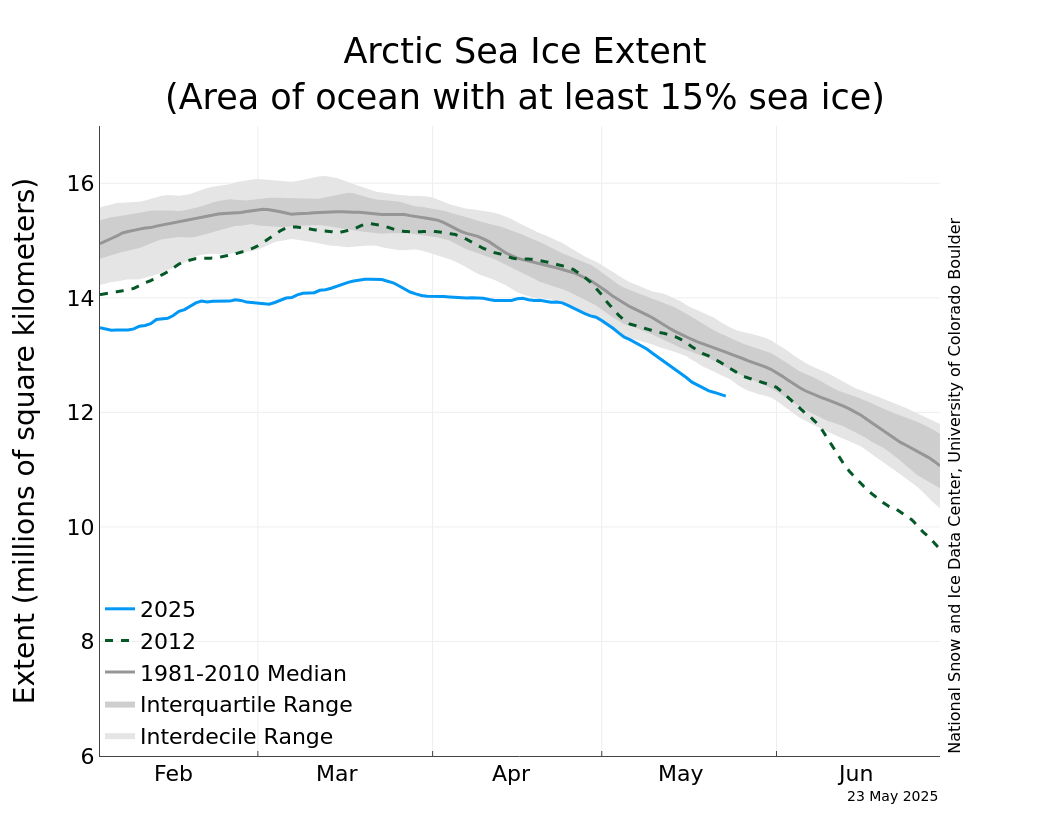
With about about two months to go until the Arctic-wide maximum sea ice extent is reached, extent remains very low. As of January 15, the National Snow and Ice Data Center (NSIDC) Sea Ice Index and the U.S. National Ice Center/NSIDC Multisensor Analyzed Sea Ice Extent (MASIE) showed the fourth lowest extent for the date, EUMETSAT OSI SAF third lowest, the Japanese Aerospace Exploration Agency (JAXA) second lowest. Total ice extent has been at or close to the lowest on record (since 1978-79) since early November (Fig. 1).
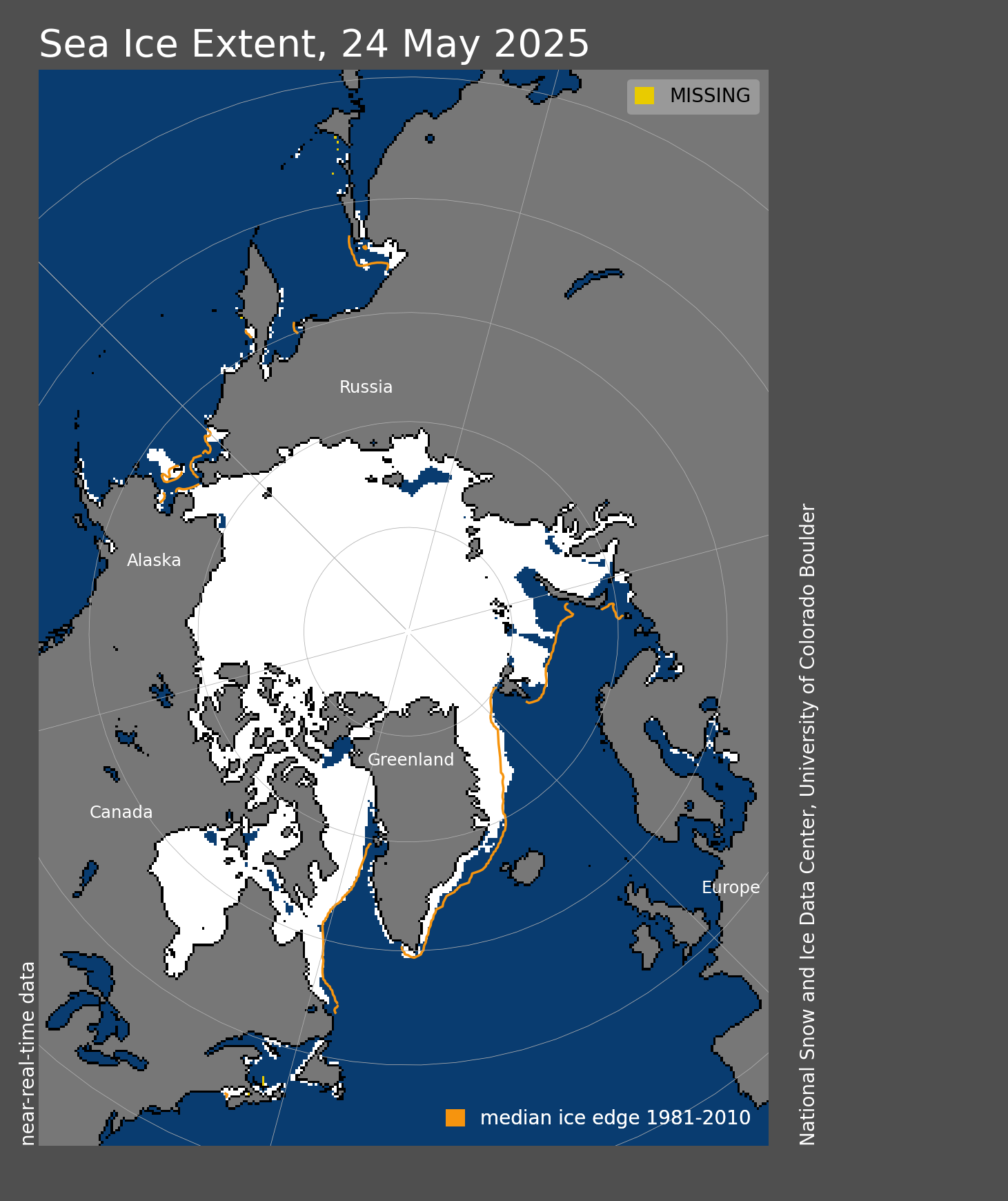
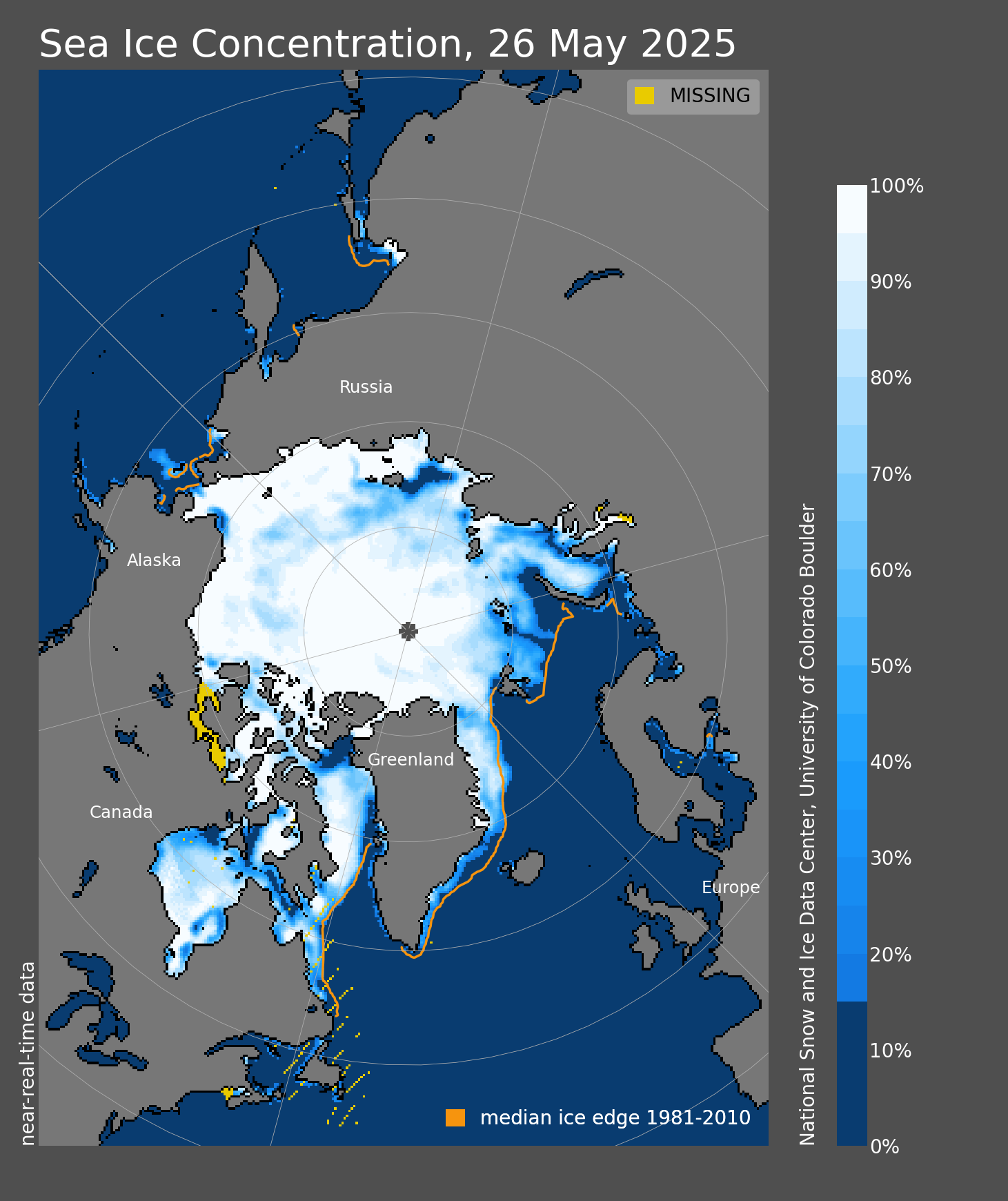
The spatial distribution of sea ice (Fig. 2) shows considerable ice on the east side of Greenland, with the pack ice edge only about 150 km from the northwest coast of Iceland. In contrast, on the west side of Greenland, open water in Baffin Bay extends to almost 75°N. In the Bering Sea, recent cold weather on the Alaska side has pushed/formed ice south of the long term median ice edge, but there is very little ice on the Russian side of the Bering Sea except in the Gulf of Anadyr.
EDIT
Sea ice thickness as modeled by the Danish Meteorological Institute (Fig. 4) shows ice less than about two meters thick everywhere except in a fairly narrow zone from the northern Greenland coast southwestward along the northern coast of the Canadian Arctic Archipelago to the eastern Beaufort Sea. Total Arctic sea ice volume from this model is the lowest of record, even lower than last year and about 20 percent lower than the ice volume in mid-January 2024.
EDIT
https://alaskaclimate.substack.com/p/arctic-sea-ice-update-mid-january
