Environment & Energy
Related: About this forum
Cancer risk may increase with proximity to nuclear power plants -- Harvard
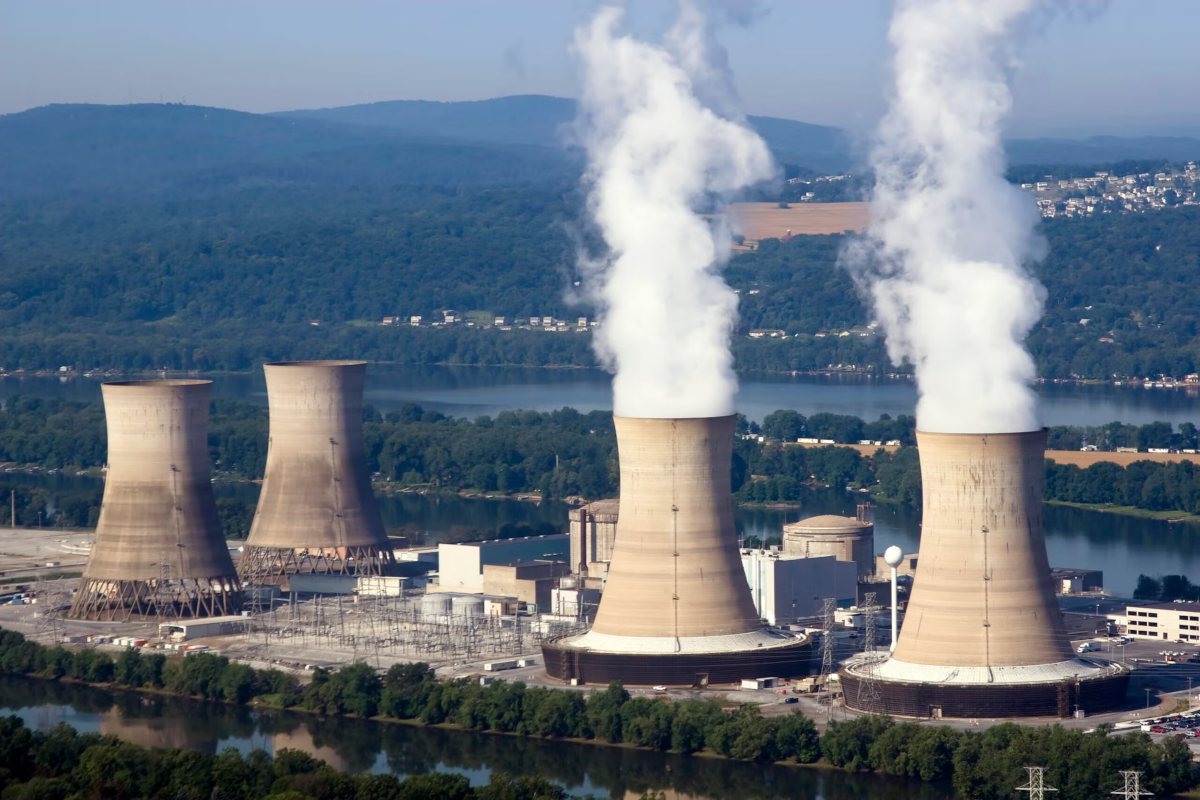
Cancer risk may increase with proximity to nuclear power plants
Harvard.edu | Maya Brownstein | December 18, 2025
In Massachusetts, residential proximity to a nuclear power plant (NPP) was associated with significantly increased cancer incidence, with risk declining by distance, according to a new study led by Harvard T.H. Chan School of Public Health.
The study was published Dec. 17 in Environmental Health. It was conducted by researchers in the Department of Environmental Health, including corresponding author Yazan Alwadi, PhD student, and senior author Petros Koutrakis, professor of environmental sciences.
Despite widespread—and potentially expanding—reliance on nuclear power in the U.S., epidemiologic research investigating the health impacts of NPPs remains limited. Meanwhile, the results of studies conducted internationally vary significantly. To broaden the evidence base, the researchers assessed proximity of Massachusetts zip codes to nuclear power plants and 2000-2018 cancer incidence data collected by the Massachusetts Cancer Registry. They controlled for confounders such as air pollution and sociodemographic factors.
The researchers estimated that about 20,600 cancer cases in the state—roughly 3.3% of all the cases included in the study—were attributable to living near an NPP, with risk declining sharply beyond roughly 30 kilometers from a facility. The risk of developing cancer attributable to living near an NPP generally increased with age. more
https://hsph.harvard.edu/news/cancer-risk-may-increase-with-proximity-to-nuclear-power-plants/
Read the study:
https://link.springer.com/article/10.1186/s12940-025-01248-6
Results
Proximity to plants significantly increased cancer incidence, with risk declining by distance. At 2 km, females showed RRs of 1.52 (95% CI: 1.20–1.94) for ages 55–64, 2.00 (1.59–2.52) for 65–74, and 2.53 (1.98–3.22) for 75 + . Males showed RRs of 1.97 (1.57–2.48), 1.75 (1.42–2.16), and 1.63 (1.29–2.06), respectively. Cancer site-specific analyses showed significant associations for lung, prostate, breast, colorectal, bladder, melanoma, leukemia, thyroid, uterine, kidney, laryngeal, pancreatic, oral, esophageal, and Hodgkin lymphoma, with variation by sex and age. We estimated 10,815 female and 9,803 male cancer cases attributable to proximity, corresponding to attributable fractions of 4.1% (95% CI: 2.4–5.7%) and 3.5% (95% CI: 1.8–5.2%).
$30+ BILLION to build a nuke plant to heat water is nothing if it causes cancer as a bonus, is it.
 = new reply since forum marked as read
Highlight:
NoneDon't highlight anything
5 newestHighlight 5 most recent replies
= new reply since forum marked as read
Highlight:
NoneDon't highlight anything
5 newestHighlight 5 most recent replies

Norrrm
(5,641 posts)Acc'g to Trump.

eppur_se_muova
(42,555 posts)
OKIsItJustMe
(22,176 posts)It certainly would warrant investigation, but, that’s not the question they were looking to answer. As you know, some nuclear proponents suggest that nuclear power plants (NPPs) pose no health threat at all.
Alwadi, Y., Evans, J.S., Schwartz, J. et al. Residential proximity to nuclear power plants and cancer incidence in Massachusetts, USA (2000–2018). Environ Health 24, 92 (2025). https://doi.org/10.1186/s12940-025-01248-6
Abstract
Purpose
To investigate the associations between residential proximity to nuclear power plants and ZIP code–level cancer incidence among Massachusetts residents.
Methods
We assessed proximity of Massachusetts ZIP codes to nuclear power plants using an inverse-distance weighted metric. We obtained cancer incidence data (2000–2018) from the Massachusetts Cancer Registry. We applied two approaches: (1) longitudinal Generalized Estimating Equation (GEE) Poisson regression to evaluate yearly incidences for all cancers combined, and (2) cross-sectional log-linear Poisson regression for site-specific cancers. We adjusted models for PM2.5, demographic, socioeconomic, environmental, and healthcare covariates, and stratified analyses by sex and four age groups (45–54, 55–64, 65–74, 75 +).
Results
Proximity to plants significantly increased cancer incidence, with risk declining by distance. At 2 km, females showed RRs of 1.52 (95% CI: 1.20–1.94) for ages 55–64, 2.00 (1.59–2.52) for 65–74, and 2.53 (1.98–3.22) for 75 + . Males showed RRs of 1.97 (1.57–2.48), 1.75 (1.42–2.16), and 1.63 (1.29–2.06), respectively. Cancer site-specific analyses showed significant associations for lung, prostate, breast, colorectal, bladder, melanoma, leukemia, thyroid, uterine, kidney, laryngeal, pancreatic, oral, esophageal, and Hodgkin lymphoma, with variation by sex and age. We estimated 10,815 female and 9,803 male cancer cases attributable to proximity, corresponding to attributable fractions of 4.1% (95% CI: 2.4–5.7%) and 3.5% (95% CI: 1.8–5.2%).
Conclusions
Residential proximity to nuclear plants in Massachusetts is associated with elevated cancer risks, particularly among older adults, underscoring the need for continued epidemiologic monitoring amid renewed interest in nuclear energy.
…
Notably, relative risks sharply declined with increasing distance, decreasing substantially at 5 km and becoming negligible beyond approximately 25 km from the nuclear facilities (Fig. 3). This suggests that elevated cancer risks are disproportionately concentrated in communities located within close proximity to nuclear power plants. Unlike health risks associated with coal power plants, which typically affect larger populations spread over broader geographic areas [19], the impacts of nuclear power plants appear to be highly localized, significantly affecting communities residing closest to the plants. Massachusetts, as one of the states with substantial populations residing in close proximity to multiple nuclear power facilities, underscores the importance of these findings.
…

NNadir
(38,588 posts)...is, as usual, spun up by antinukes.
We have here, in this forum, people who like to carry on about the writings of say, James Hansen, nuclear energy supporter, as if they give a shit about what he says about energy.
As a prominent nuclear energy advocate here, I have repeatedly made the statement that nuclear energy need not be risk free to be vastly superior to all other forms of energy. It only needs to be vastly superior to everything else, which it is.
As it happens, Hansen has never said, nor have I said, that nuclear energy is risk free. What he and I have both said is that nuclear energy saves lives on balance. It follows that fossil fuel marketeers, including those rebranding them as "hydrogen" are arguing for killing people.
Every year, fossil fuel waste, including those promoted by fossil fuel greenwashers here working to rebrand it as hydrogen, kills about 8 million people.
It's called "air pollution," the fossil fuel waste in question.
This, of course, ignores the greater risk of the destruction of the planetary atmosphere, about which antinukes, including "I'm not an antinuke" antinukes pretend to care, not that they can really be taken seriously.
I suppose that we are about to hear that by shutting it's nuclear plants to burn coal, we should expect German cancer rates to fall.
Correct?
I hope to write up this paper in the immediate future, now that the fossil fuel marketeer working to rebrand coal as hydrogen has returned:
Multiscale Mechanistic Insights into Hydrogen Production from Microalgae via Molten Hydroxide-Mediated Thermochemical Conversion Jun Li, Ling Lei, Dian Zhong, Hongyang Zuo, Han Zhu, Kuo Zeng, Haiping Yang, and Hanping Chen Environmental Science & Technology 2026 60 (9), 7054-7066. This is quite literally "green" hydrogen, since it is made from algae, which sounds really, really great, until one realizes that 100% of the authors of the paper are Chinese coal scientists, and the source of heat in the article is the combustion of coal.
Antinukes, in my experience, whining with their selective attention and abysmal ignorance, don't have a problem with coal, as evidenced by the case of the German nuclear phase out driven by selective attention.
I'm waiting - not seriously because I've dealt with this vapid nonsense here for decades and I know what to expect from intellectual Lilliputians criticizing nuclear energy - for an antinuke to announce that there is a form of energy that is risk free.
OKIsItJustMe
(22,176 posts)Perhaps I am wrong.

thought crime
(1,800 posts)Last edited Fri Mar 20, 2026, 11:20 PM - Edit history (1)
I'm pretty sure this evidence will be refuted and dismissed by the Nuke Bros. Just repeat the word "Modular" over and over. Do we really have to go through this again because D. Trump hates windmills?
I've been on the verge of accepting this SMR nuclear stuff but the local pro-nuclear/only-nuclear poster here has pretty much convinced me otherwise. It's same old fission re-packaged and could be worse because it could be more widely distributed and more poorly managed.