Environment & Energy
Related: About this forumA floating solar plant using vertical panels is flipping the usual solar curve
https://www.vozpopuli.com/indux/en/a-floating-solar-plant-using-vertical-panels-is-flipping-the-usual-solar-curve-by-producing-more-power-in-the-morning-and-late-afternoon-the-hours-when-homes-and-factories-actually-spike-demand/5308/
A floating solar plant using vertical panels is flipping the usual solar curve by producing more power in the morning and late afternoon, the hours when homes and factories actually spike demand
In Bavaria, SINN Power is testing a surprisingly simple answer. Stand the panels upright, float them on water, and let them catch the lower sun at the edges of the day. The company inaugurated what it calls the world’s first vertically floating photovoltaic plant at the Jais gravel pit in Germany’s Starnberg district, a 1.87-megawatt system with 2,600 solar modules.
Why vertical changes the clock
Most conventional solar panels in the Northern Hemisphere are tilted toward the south. That setup maximizes midday sunlight, but by the EU’s own science advisers, it can also create a midday power surge that is less useful when demand rises earlier or later.
SKipp flips that pattern. The modules face east and west, so one side works harder in the morning and the other in the late afternoon, while the bifacial design can use light from both sides.
Details
https://www.mdpi.com/2071-1050/13/8/4317
You can download a PDF there.
Questions and comments:
It appears that the cells are indeed "bifacial" ... one on each side, like having an east and west set of panels.
Wind is allowed to flex things. Apparently, water helps in this respect, compared to a ground mount.
Also, it looks like the water surface is not used as a reflector, to bounce some light into the panels.
Need to read the report.
OOOPS 17.5 MB
Shoulld be no problem except for phone users' data and memory.
 = new reply since forum marked as read
Highlight:
NoneDon't highlight anything
5 newestHighlight 5 most recent replies
= new reply since forum marked as read
Highlight:
NoneDon't highlight anything
5 newestHighlight 5 most recent replies

eppur_se_muova
(42,911 posts)
usonian
(27,193 posts)Fastest I ever (didn't) read a 17.5 MB PDF
Page 13.
Send money!!!!!

OKIsItJustMe
(22,417 posts)I’m inclined to think (however) that a more conventional approach, with a sodium BESS would be a better bet. (I would be glad to be proven wrong.)

NNadir
(38,875 posts)If one monitors grids - most of them anyway - and I monitor a number of them, power demand peaks in the early evening, after the sun goes down.
I've been downloading them for years, and they appear in some of my posts here, generally from CAISO, the California grid, the solar nirvana that continues to rely on methane mines for reliable power:
Here are few I happen to have handy from earlier posts:
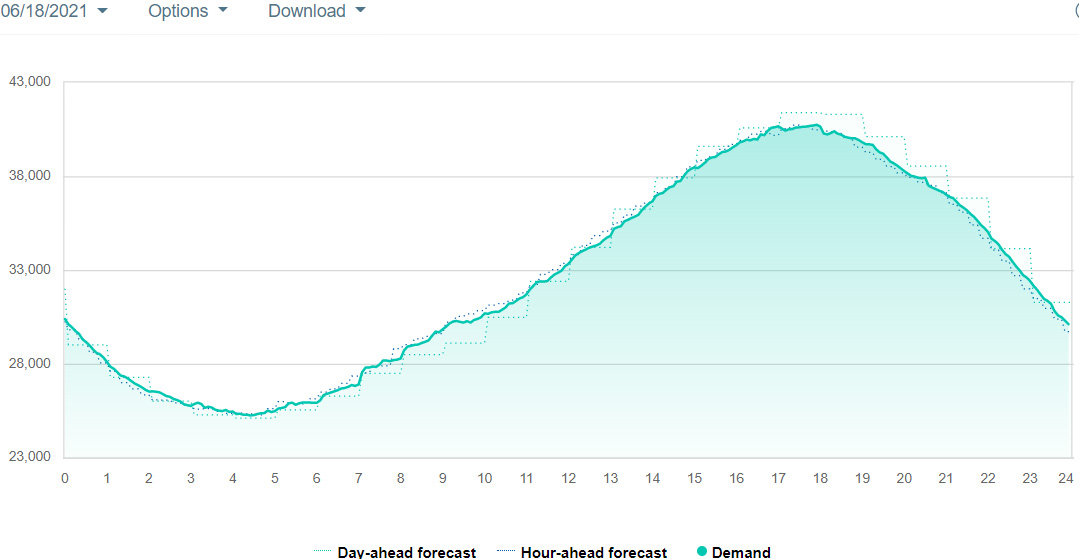
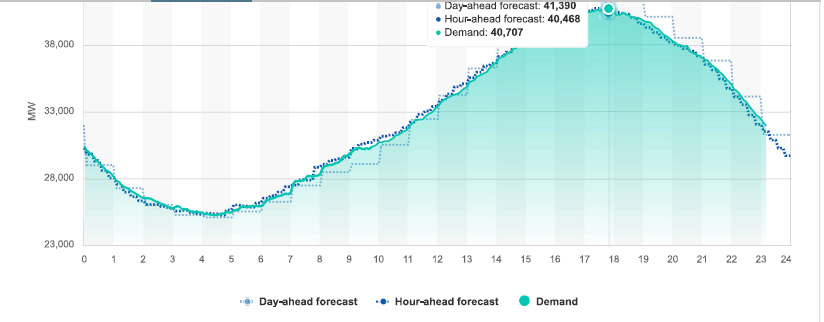

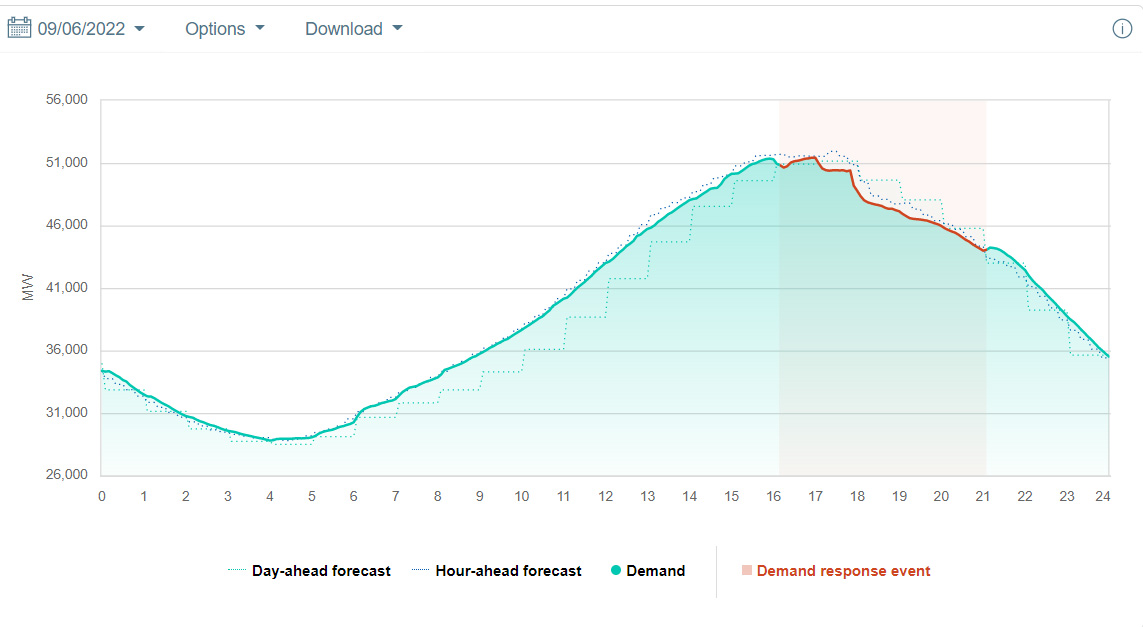
One can access these graphics at will from the CAISO website, where one can also see when solar output in solar nirvana peaks, and the offset with California demand peaks.
The CAISO site is here:
Outlook CAISO
I oppose the profligate development/destruction of land and sea and freshwater wilderness to construct energy generation industrial parks, which is why I oppose the popular but unsustainable solar industry.
Floating solar junk is probably worst of all, since the failure of the solar and wind affectation to address the collapse of the planetary atmosphere has destabilized the weather, and extreme weather cuts through solar industrial parks readily.
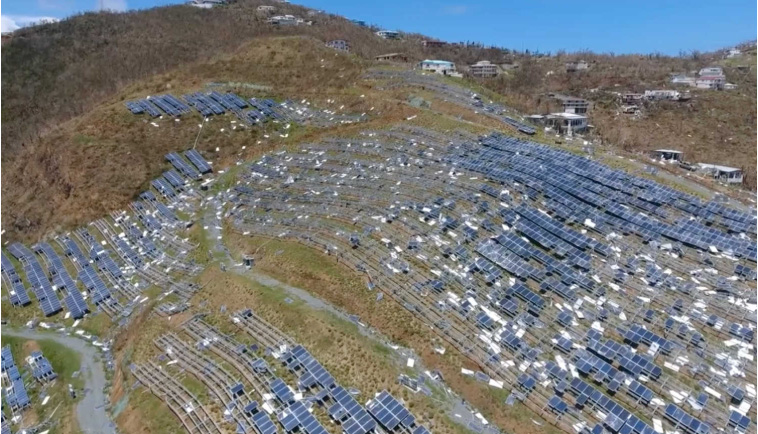
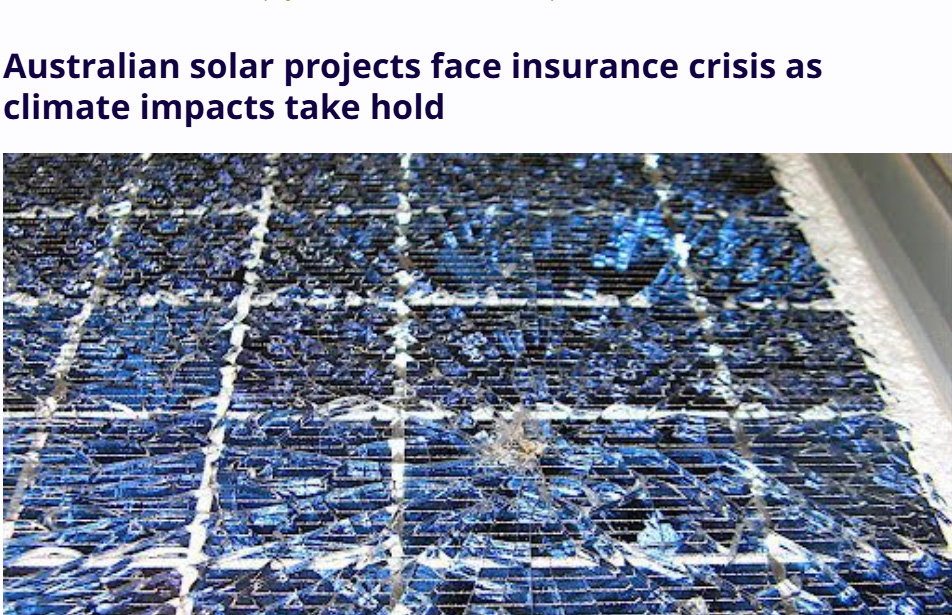
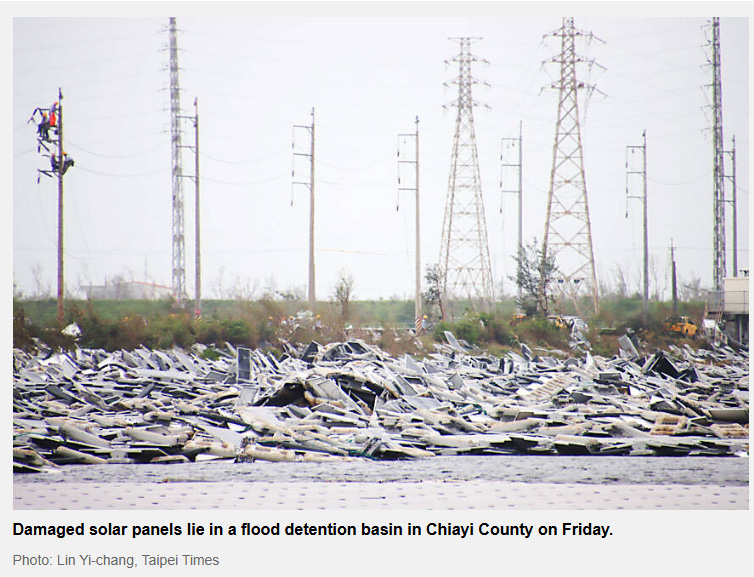
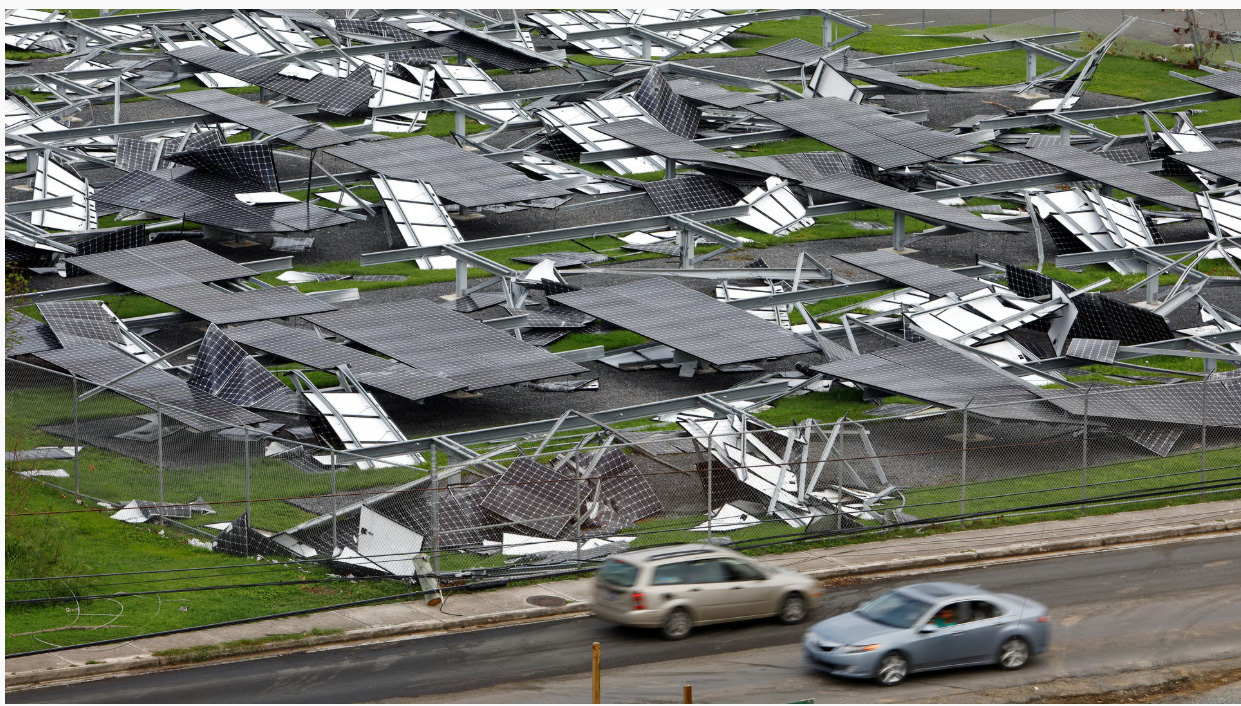
Here's are some examples of destruction of solar industrial parks by extreme weather from one of my earlier posts:
From Inside Climate News:
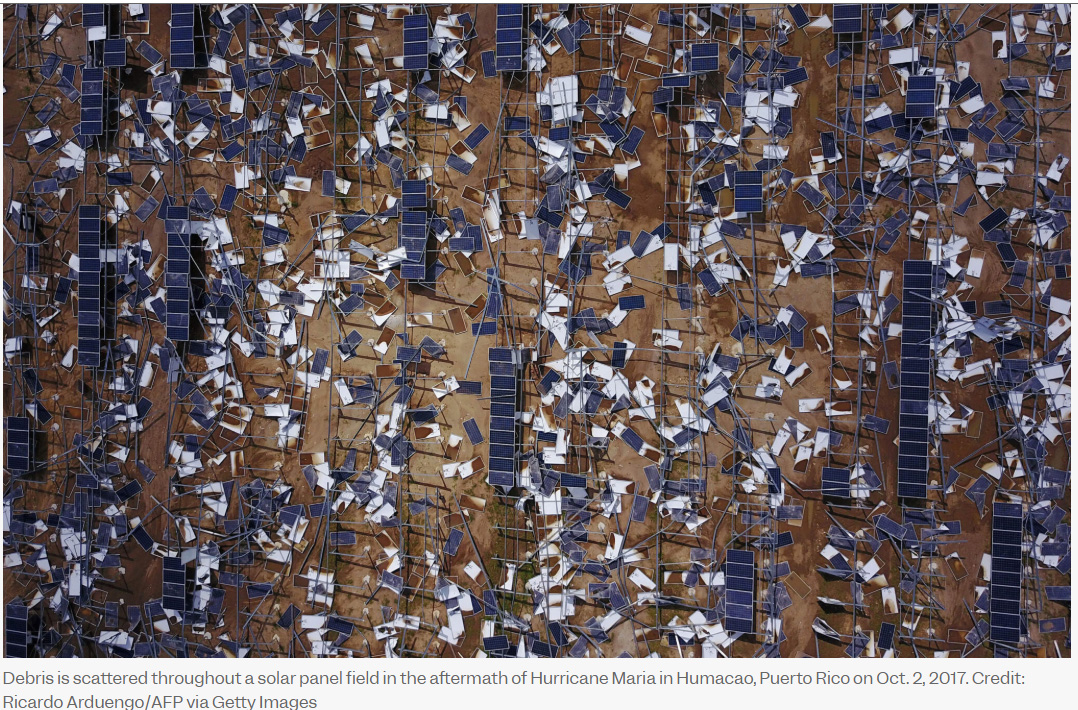
Virgin Group Company BMR Energy Announces Plans to Rebuild St. Thomas Solar Farm
Renew Economy:
Solar groups deny damage, pollution claims after Danas
(There's reference to denial again.)
Why the solar revolution is in grave danger—and how it can be saved
Now we want to do the same for our bodies of water, far less stable than land based cases?
The solar industry is not "green;" it is not sustainable; and it represents no alternative to the use of dangerous fossil fuels, since it depends on the availability of fossil fuels to address its intrinsic (and frankly dangerous, given existing heat extremes) unreliability.
Finishline42
(1,189 posts)NNadir
(38,875 posts)For decades now, antinukes isolate a short period of time that a fossil fuel dependent grid run on so called "renewable energy" and pretend it matters. It doesn't, and all the giggly nonsense about "100% renewable energy" for a few minutes of the day doesn't transform the lie into reality.
The California Energy Commission maintains a database of their sources of electricity, over a period of decades..
I access it all the time, because data can easily dismiss a lie, the lie in this case being that so called "renewable energy" is a clean and reliable source of energy.
It, the data, here:
California Electrical Energy Generation Data.
The largest source of electrical generation in California has long been, is, and will remain so until it returns to nuclear power, dangerous natural gas.
Apologists for so called "renewable energy" couldn't care less.
So called "renewable energy," despite the vast destruction it's caused to wilderness, so much so that even the antinuke asshole little Benny Sovacool complained about it, is lipstick on the gas dependency of that State.
Of course, to be absolutely clear, antinukes and "I'm not an antinuke" antinukes have never, do not now, and never will care about the destruction of wilderness nor have they ever, nor do they do, nor will they ever care about fossil fuels.
They are only interested in attacking nuclear energy, about which they complain insipidly about "waste," "cost," and timelines, areas in which nuclear energy is vastly superior to all the other garbage they hype and excuse.
So called "renewable energy" always has been, is, and always will be a cover for the use of fossil fuels, about which antinukes and "I'm not an antinuke" antinukes couldn't care less.
Jacobson, the author of the idiotic tweet along these lines is the "I'll sue you if you question my cant" pal of Sovacool's who Jim Hansen was pleased to trash in EST many years ago after as usual, with his indifference to fossil fuels and the destruction of the planetary atmosphere, he did the only thing "renewables will save us" types do, attack clean and sustainable nuclear energy.
OKIsItJustMe
(22,417 posts)Please note: Material below is drawn from a Creative Commons source:
IEA (2025), Renewables 2025, IEA, Paris https://www.iea.org/reports/renewables-2025, Licence: CC BY 4.0
Below, reference is made to a “Low-RES scenario”:
(Begining on Page 80)
From non-hydro renewable power generation capacity added between 2010 and 2023, approximately 3 200 TWh of electricity was generated in fuel-importing countries in 2023. Replacing this output with fossil fuels would require significantly higher energy inputs due to their lower conversion efficiencies. For example, typical coal and open-cycle gas turbine power plants operate at 30-40% efficiency, while combined-cycle gas turbines reach 50-60%. This means that each GWh of renewable electricity produced avoided the need for 2-3 GWh of fossil fuel inputs. For instance, 1 GW of solar PV capacity in Europe generates roughly 1 000 GWh annually, equivalent to burning around 3 000 GWh of coal, or approximately 400 000 tonnes.
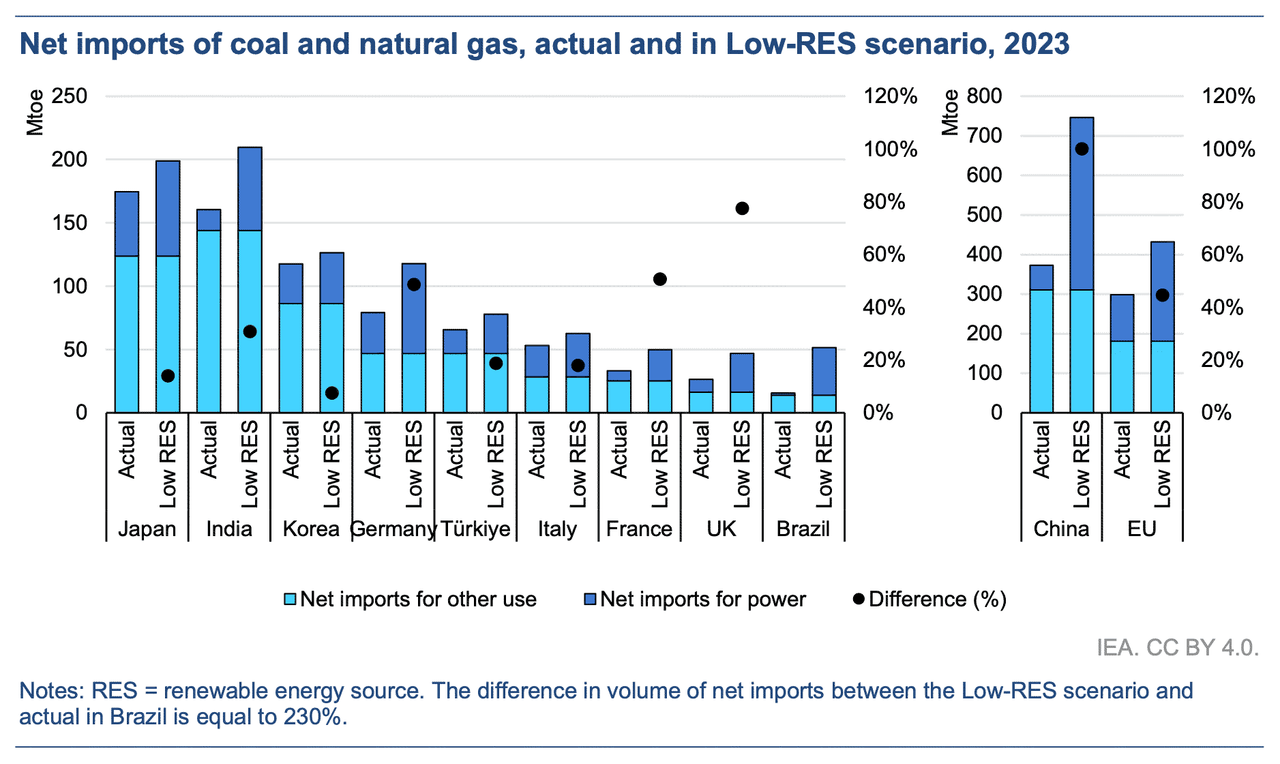
As a result, global imports of coal and gas in 2023 would have been around 45% higher – equivalent to over 8 000 TWh of additional fuel inputs – without non-hydro renewable energy developments since 2010. This means roughly 700 million tonnes of coal and 400 billion cubic metres of natural gas, together representing about 10% of total global consumption of these fuels in 2023.
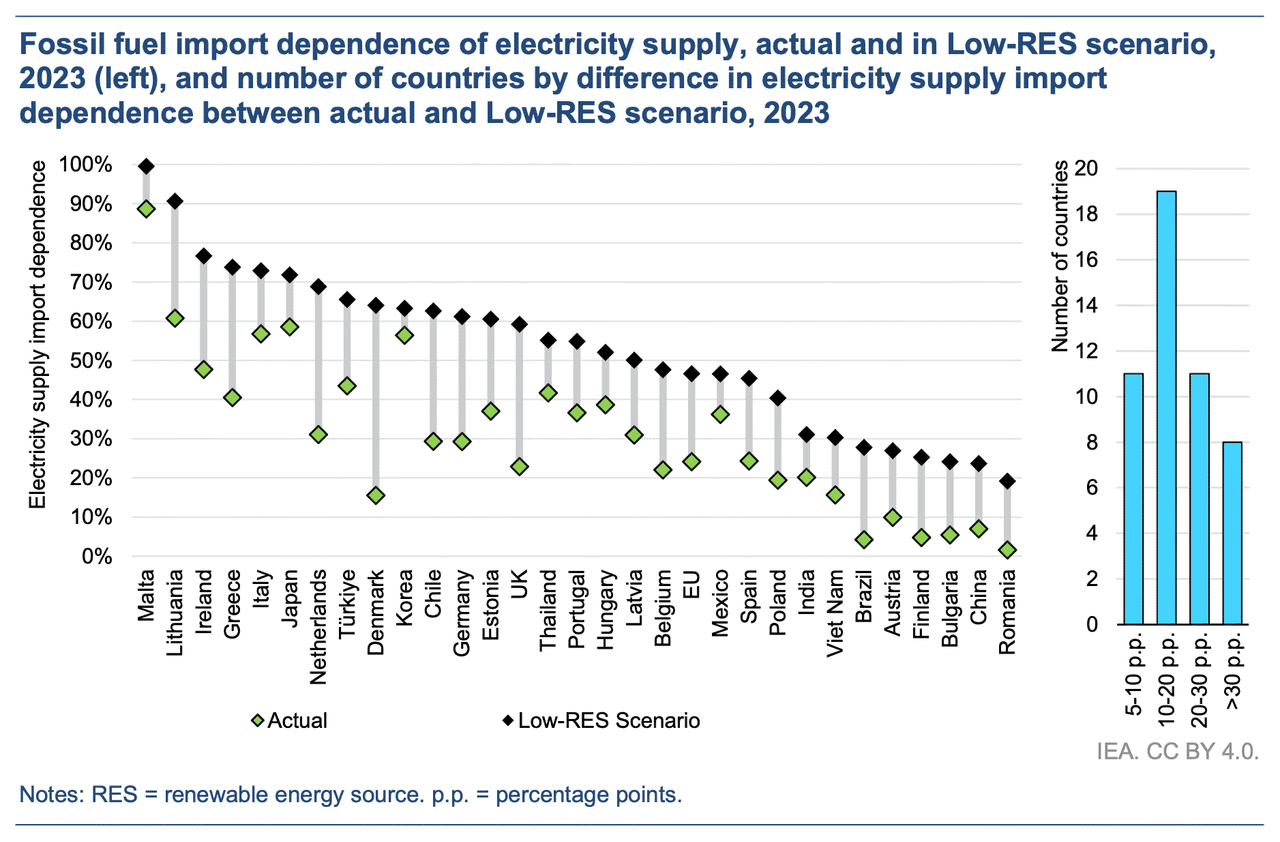
The Low-RES scenario results in a substantial increase in reliance on imported fuels for electricity generation, significantly raising energy security risks in many countries. This impact is especially pronounced in countries with limited domestic energy resources, where renewables have played a key role in avoiding high import dependence. In the absence of renewable energy deployment, countries such as Germany, Italy, the Netherlands, the United Kingdom, Denmark, Türkiye, Chile, Thailand and Japan would have greater fossil fuel-based generation, increasing their vulnerability to supply disruptions.
In the European Union, limited domestic fossil fuel resources have long been the main driver behind renewable energy incentives. In 2023, about one-quarter of the EU electricity supply was met by imported fossil fuels. Without wind, solar PV and bioenergy deployment over the previous decade, this share would have reached nearly 50%. The impact is most striking for Denmark, the Netherlands, Germany and Greece, where the difference could have been as much as 30-50 percentage points. In the Low-RES scenario, the energy security challenges during the 2022 energy crisis would have been significantly more severe.
The United Kingdom expanded its non-hydro renewable electricity generation nearly sixfold between 2010 and 2023. As a result, the share of its electricity supply met by imported fossil fuels decreased from around 45% in 2013 to less than 25% in 2023, despite declining domestic coal and gas output. In the Low-RES scenario, import dependence would have approached 60% by 2023.
In China, despite massive domestic coal production, imports made up about 10% of the country’s total coal supply in 2023 – and nearly 40% of its natural gas. Without deployment of renewables over the past decade, China’ s fossil fuelbased electricity generation would have been more than 25% higher. This would have potentially required a doubling of fossil fuel imports, raising China’s electricity supply import dependence from 7% to nearly 25%.
Brazil, with one of the lowest fossil fuel import dependencies among large economies – around 5% in 2023 – would also have experienced significant impacts. Without wind and solar energy deployment, fossil-based generation would have needed to rise by around 170 TWh, primarily from imported natural gas. Imports of natural gas would have increased nearly five-fold, pushing electricity import dependence to almost 30%, despite the country’s large hydropower base.
…
Finishline42
(1,189 posts)You said...
Of course, to be absolutely clear, antinukes and "I'm not an antinuke" antinukes have never, do not now, and never will care about the destruction of wilderness nor have they ever, nor do they do, nor will they ever care about fossil fuels.
To begin with, this is how I see Solar being advantageous to deserts and arid climates. Not only do the panels provide shade where none exists, but they can also provide moisture from the condensation on the panels.
Link to tweet
?s=20
There are other examples of where solar has helped to reverse the desertification of arid lands - in Africa and China, that I have seen.
In the end it doesn't matter what you or I think, it's what is happening world-wide. Now that the orange idiot has blocked panels from China, look who is getting those panels instead...
Link to tweet
?s=20
NNadir
(38,875 posts)The contempt for the desert ecosystem is duly noted, as is the lack of reputable references.
Response to usonian (Original post)
OKIsItJustMe This message was self-deleted by its author.

hunter
(40,951 posts)In fifteen to twenty years it's going to be a nightmare, especially if we use batteries in the way that many solar and wind proponents enthusiastically promote.
There will be much celebration of recycling. Unfortunately it will be just about as effective as plastic recycling now is.
We will have trashed the world for naught, leaving our children and grandchildren to clean up the mess... if it's even possible.
As an aside, I was struck by the unnatural color of the water in that photograph. That's an environmental horror story too. The natural lakes and gravel pits in this area of Bavaria have no outlets and had became so polluted by nutrient rich runoff from surrounding farms that they were becoming hypoxic. They've been artificially oxygenated starting in the 'seventies to prevent them from going completely foul and anaerobic. This takes energy.
There's a song many of us learned in kindergarten: There was an old lady who swallowed a fly...
It did not end well for the woman.