https://www.nytimes.com/athletic/7398989/2026/06/27/scotland-world-cup-exit-underachievers/
https://archive.ph/JboMR
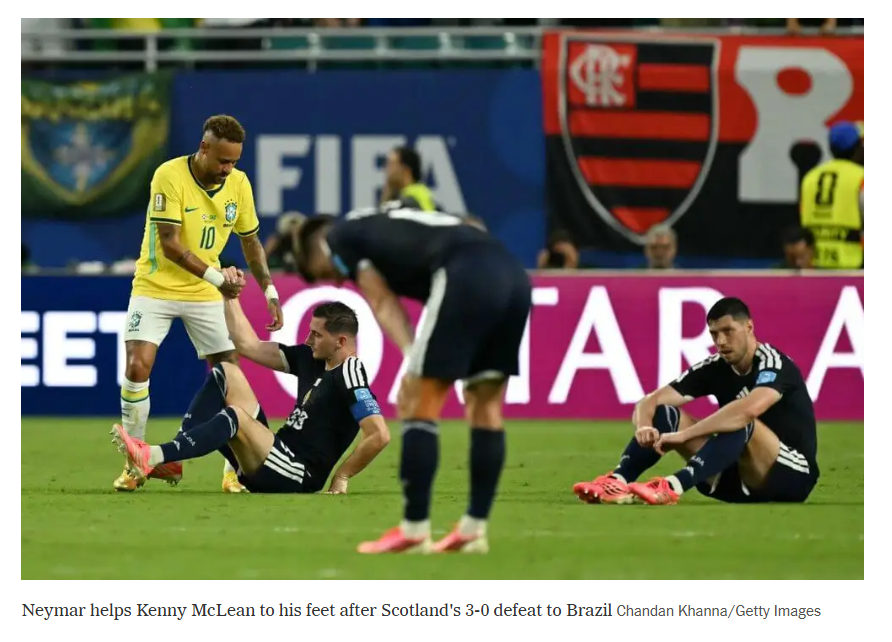
Scotland’s early elimination from World Cup 2026 and Steve Clarke’s departure as coach isn’t surprising to those who watched their qualification matches, where they struggled to play cohesive football but sealed their place thanks to a thrilling, almost unbelievable, 4-2 victory over Denmark courtesy of some impossible-to-repeat goals. But it’s even less surprising considering Scotland’s tournament history. Scotland have come to be regarded as serial failures, inevitable disappointments, to the point where this has become the nation’s footballing identity. Qualification is met with a “Maybe… this time?” vibe, eternally referencing past disappointments.
This is a great pity, because Scotland are genuinely among the most significant nations in football history. Scotland figured out how to play football sooner than anyone, including England; the passing game we take for granted was perfected north of the border in the late 19th century when English sides were still committed to dribbling. Scotland have also produced — in one sense — as many top-class players as any other nation. The Ballon d’Or, awarded to the best player in the world, has been officially awarded since 1960, and for a long time, it applied only to European players. But had the award been in operation since the formation of association football in the 1860s and always global, it would be a three-way race between Scotland, Brazil and Argentina for the most wins over the years.
The likes of Nick Ross and Alex James mean little to modern supporters, but these were among the best players in world football in the late 19th or early 20th century. This is a country which has produced a disproportionate number of leading managers. 13 managers have won the English Football League three times or more, and five of them were Scots: George Ramsey, Matt Busby, Bill Shankly, Sir Kenny Dalglish and Sir Alex Ferguson. And this is also a nation that has produced one of the most famous European Cup-winning sides: in 1967, Celtic’s Lisbon Lions were crowned the best side in Europe, with a starting XI comprising 11 players all born within 30 miles of Glasgow.
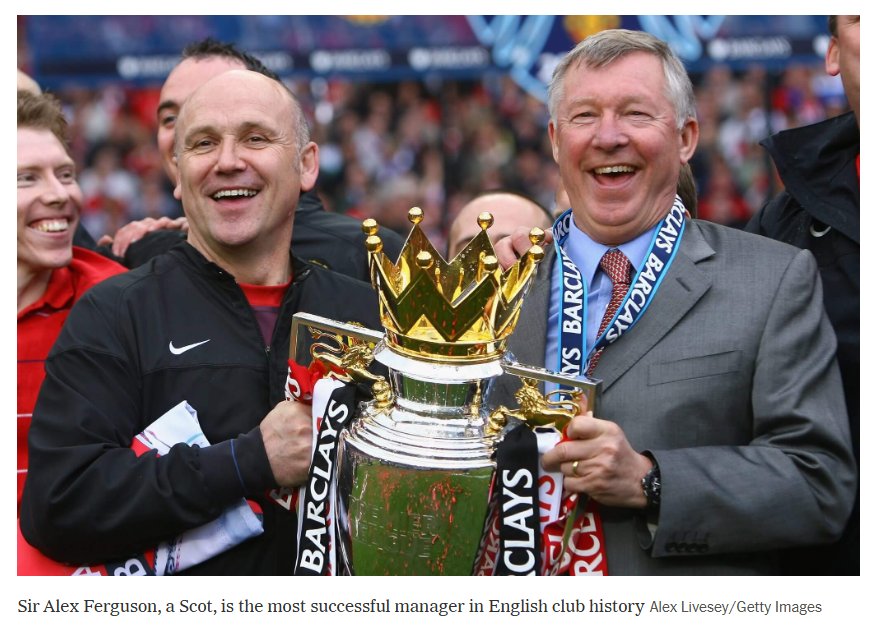
At the club level, Scotland could conquer Europe. They got the strategy right. They produced players. They produced managers. But among all this, Scotland has consistently failed to produce an international side capable of challenging the best. This is Scotland’s identity. And it stems from a combination of two factors: their overwhelming obsession with England, and ignorance of the Scottish Football Association. This has consistently put the nation on the back foot and resulted in a default approach that is a mixture of negativity and isolationism.
snip

 = new reply since forum marked as read