Looking back at her legacy.
GREGORY SCRUGGS MARCH 30, 2018
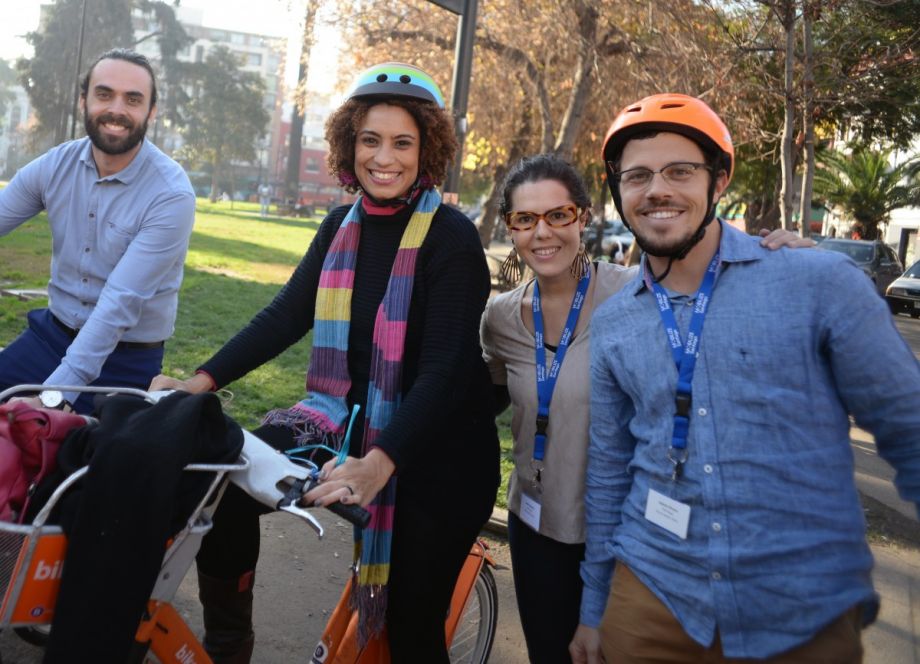
The late Marielle Franco, second from left. (Credit: Institute for Transportation and Development Policy)
Alittle over two weeks have passed since Rio de Janeiro city councilor and former Rio Human Rights Commission member Marielle Franco was shot and killed along with her driver in what authorities believe was a targeted assassination. Since then, protests and memorials have engulfed Brazil in honor of the 38-year-old political rarity: an openly queer, black single mother, born and raised in a favela.
The hashtag #MariellePresente has gone viral and black cultural luminaries like singer Janelle Monae, the Rev. Jesse Jackson, model Naomi Campbell, writer Ta-Nehisi Coates, and Black Lives Matter movement co-founders Patrisse Cullors and Opal Tometi have signed an open letter calling for a full and independent investigation into her death.
The global outcry over Franco’s death has rightly focused on her criticism of the police on human rights grounds. She had been serving on a city council committee looking into the recent federally-ordered military takeover of the Rio de Janeiro state police department and had called out a specific police battalion on her Facebook page for three murders in the Acarí favela three days before unknown gunmen tailed her vehicle as she left an event on women’s empowerment. Brazilian media has reported that the ammunition found at the scene was sold to the federal police in 2006, furthering suspicions that the police were behind her killing. But Franco also doggedly pursued another topic in her all-too-brief term in office: public transit.
. . .
The advisor says Franco recounted how sometimes she and other passengers would have to disembark and push the buses when they stalled.
More:
https://nextcity.org/urbanist-news/rio-city-councilor-marielle-franco-was-also-a-transit-activist

 = new reply since forum marked as read