Colossal Discovery on Mars Could Drive Surging Magma Under The Surface [View all]
Story by Michelle Starr • Yesterday 10:00 AM
Colossal Discovery on Mars Could Drive Surging Magma Under The Surface
© Provided by ScienceAlert
Beneath a broad plain called the Elysium Planitia, a colossal, 4,000-kilometer (roughly 2,500-mile) wide convection plume in the Martian mantle could be driving molten magma up as far as the surface. This could explain multiple lines of evidence that tantalizingly point to a volcanic Mars.
"Our results demonstrate that the interior of Mars is geodynamically active today," write planetary geophysicists Adrien Broquet and Jeffrey Andrews-Hanna of the University of Arizona, "and imply that volcanism has been driven by mantle plumes from the formation of the Hesperian volcanic provinces and Tharsis is the past to Elysium Planitia today."
Mars has shown very convincing signs of being geologically dead, inside and out. Its relatively old surface – seeming to lack recent volcanic resurfacing and tectonic motion – and absence of a global magnetic field have been held up as reasons to think there's little else but firm, motionless rock all the way down to the core.
Recent observations have poked significant holes in the notion of a completely dead Mars. There was a meteorite from Mars that made its way to Earth that showed signs of mantle convection as recently as around half a billion years ago for example.
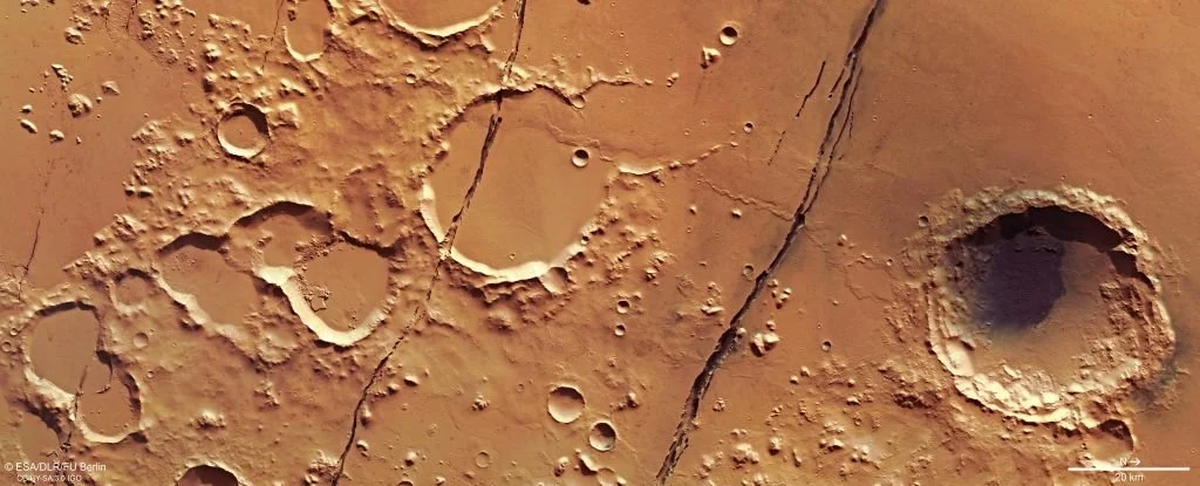
Then satellite photos revealed evidence of volcanic surface deposits as young as 50,000 years old in a fissure system called the Cerberus Fossae.
More:
https://www.msn.com/en-us/news/technology/colossal-discovery-on-mars-could-drive-surging-magma-under-the-surface/ar-AA14VBjm


 = new reply since forum marked as read